


Busy Boards and Activity Cubes: Choose by the Action
Published · Kiddil
How we research toy and book guides
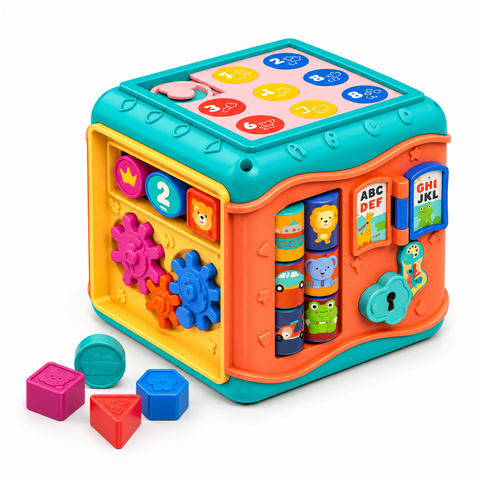
A busy board may focus on buckles and zips, while an activity cube may offer buttons, gears and shape-fitting tasks. A routine-picture board adds something else: scenes to talk about. Choose by the movements and the exact listed age, rather than assuming every “learning” board offers the same play.
Three activities that look similar in a shop photo
- Fasten and unfasten: the child works on a buckle, zip or lace.
- Move and observe: a button, roller or gear gives a visible movement to explore.
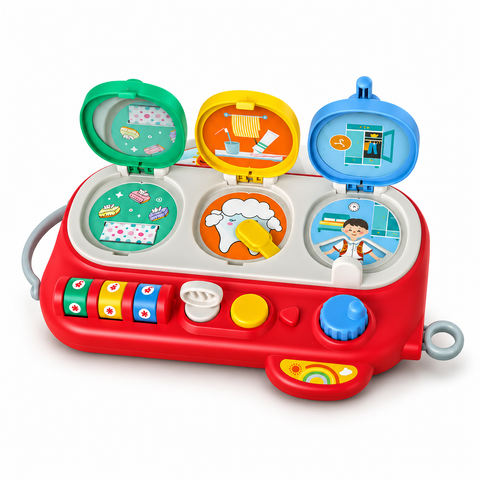
- Talk about a scene: a picture can begin a conversation about an everyday routine, even before every control is used.
One toy can combine these actions. It still helps to choose one for the first few minutes rather than demonstrating every face of a cube at once.
Compare the exact boards and cube
| Choice | Listed age | Play task |
|---|---|---|
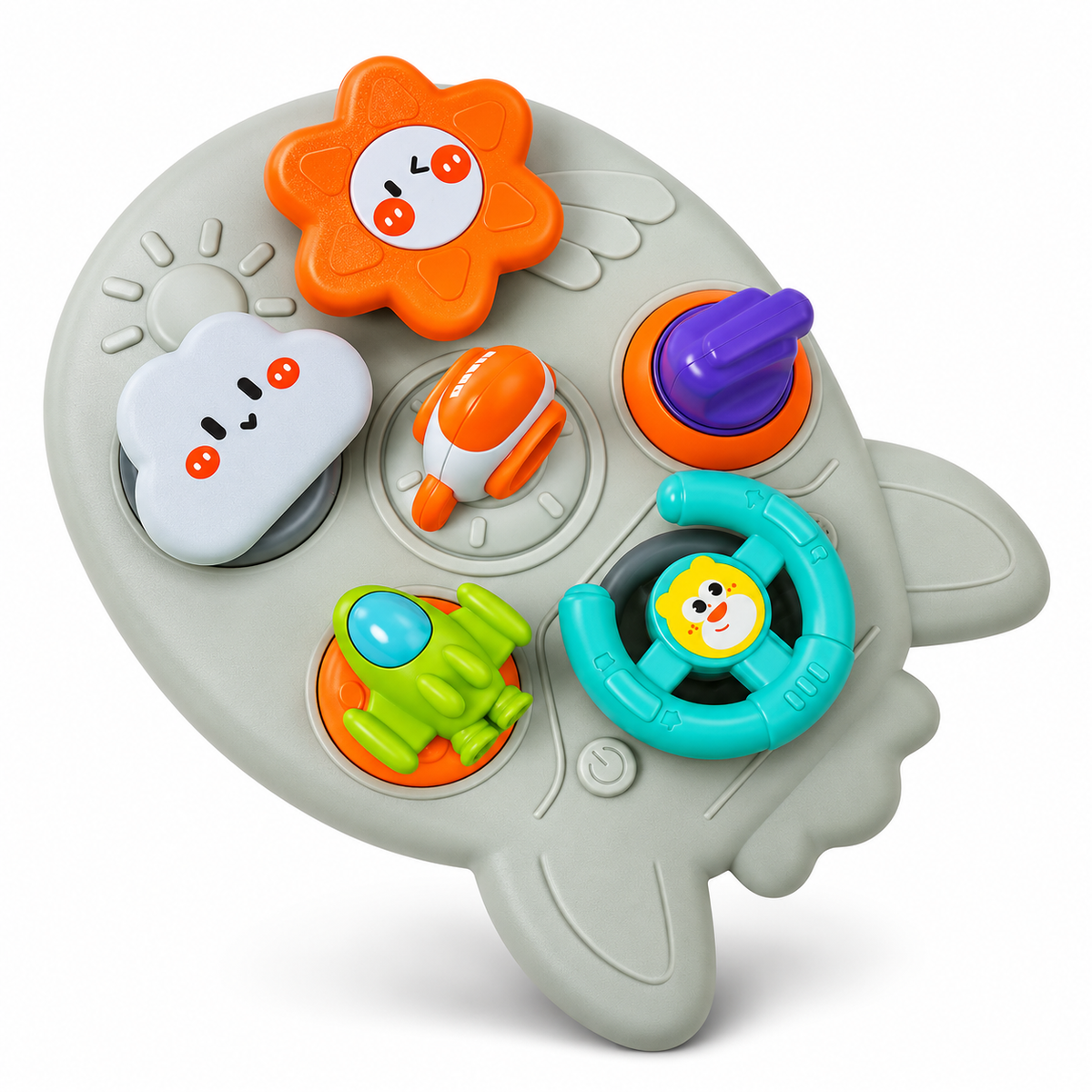
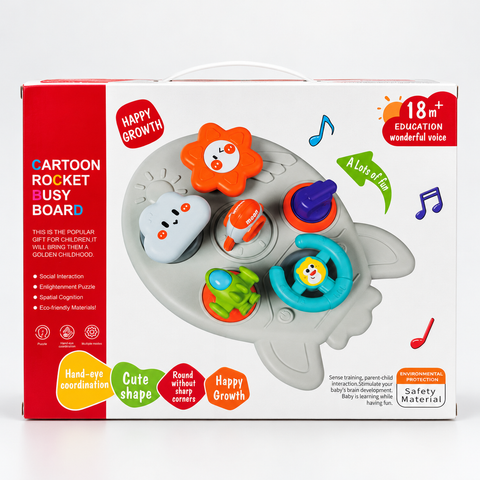
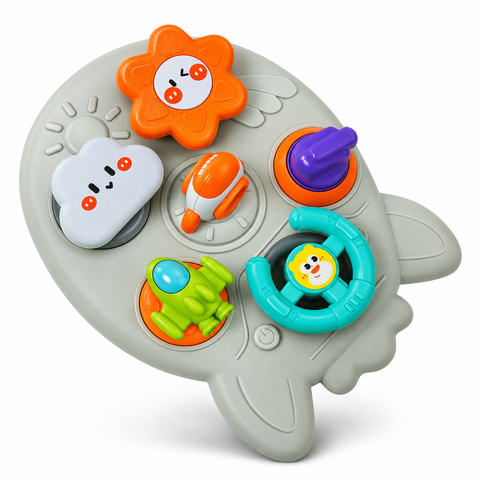
| Rocket Busy Board | 2–4 years | Buttons, turning dials and a small wheel on an activity panel. |
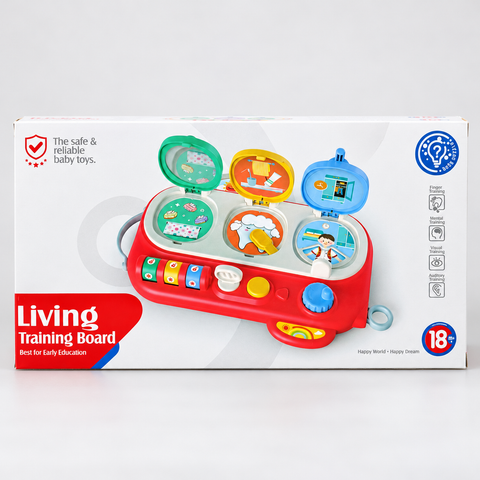
| Everyday Routines Board | 2–5 years | Three flip-up picture scenes with dials, rollers, buttons and sliders. |
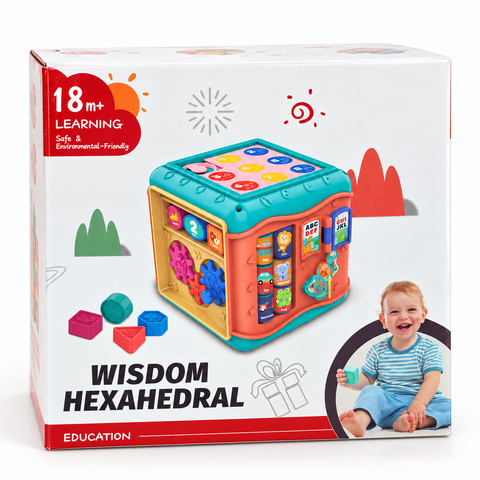
| Six-Sided Learning Cube | 2–5 years | Buttons, gears, picture rollers, flip pages and geometric shape fitting. |
A product’s recorded age is not proof that every child can manage every mechanism. Check the actual package and demonstrate a suitable action without forcing a part. These listings do not establish battery requirements, sound settings or Montessori certification; check the specific instructions for those details.
How do you start without taking over?
- Place it securely: follow the product instructions for a stable play position.
- Offer one action: “Shall we turn this dial?” or “What moves when we turn this?”
- Demonstrate slowly if invited: show the beginning of the movement, then leave the next attempt to the child.
- Follow the response: repeat a favourite action or stop. Turning to another face is an option, not a progress target.
Use a short description such as “open–close” or “turn–stop”. The child can watch, point or join in; a spoken answer is not a condition for play.
Try the idea with something you already own
A secure zip on an intact bag can offer an adult-supervised opening and closing activity. You can also draw two pictures of a familiar routine and talk about which comes first. Keep cords, detached fasteners and small household parts out of the activity. A shop-bought board is not required for that conversation.
Is every busy board a Montessori toy?
No. A commercial name does not establish that a board is a specific Montessori material. The National Center for Montessori in the Public Sector’s practical-life outline includes care-of-self activities such as dressing. That background is different from certifying a retail board or promising that practice transfers automatically to dressing independently.
What if one part is too difficult?
Check that it is being used as instructed and choose an easier visible action. You can hold the base while the child moves a suitable control. Do not pull harder to make an unfamiliar mechanism work, remove parts to make a younger child’s version, or treat a difficult first attempt as a developmental score.
For more background, read practical-life play at home for ages three to six and what “self-correcting” means in a toy. Their activity ages do not override a product label. Compare educational toys for the current choices.
Examples describe the published products, not laboratory testing or a guaranteed skill outcome. Follow each package’s age, contents and warnings; keep small pieces away from younger siblings.
Toys in this guide
Check each product's age, contents and instructions before choosing. Prices and availability come from the store.
About Kiddil: an online shop for toys and children's books in Egypt, for ages 0 to 12. Delivery to every governorate (EGP 79, free from EGP 1,500), cash on delivery and 14-day returns. All toys · Children's books