



The Pyramids of Giza for Kids: 4 Facts and 5 Puzzle-Time Activities
Published · Kiddil
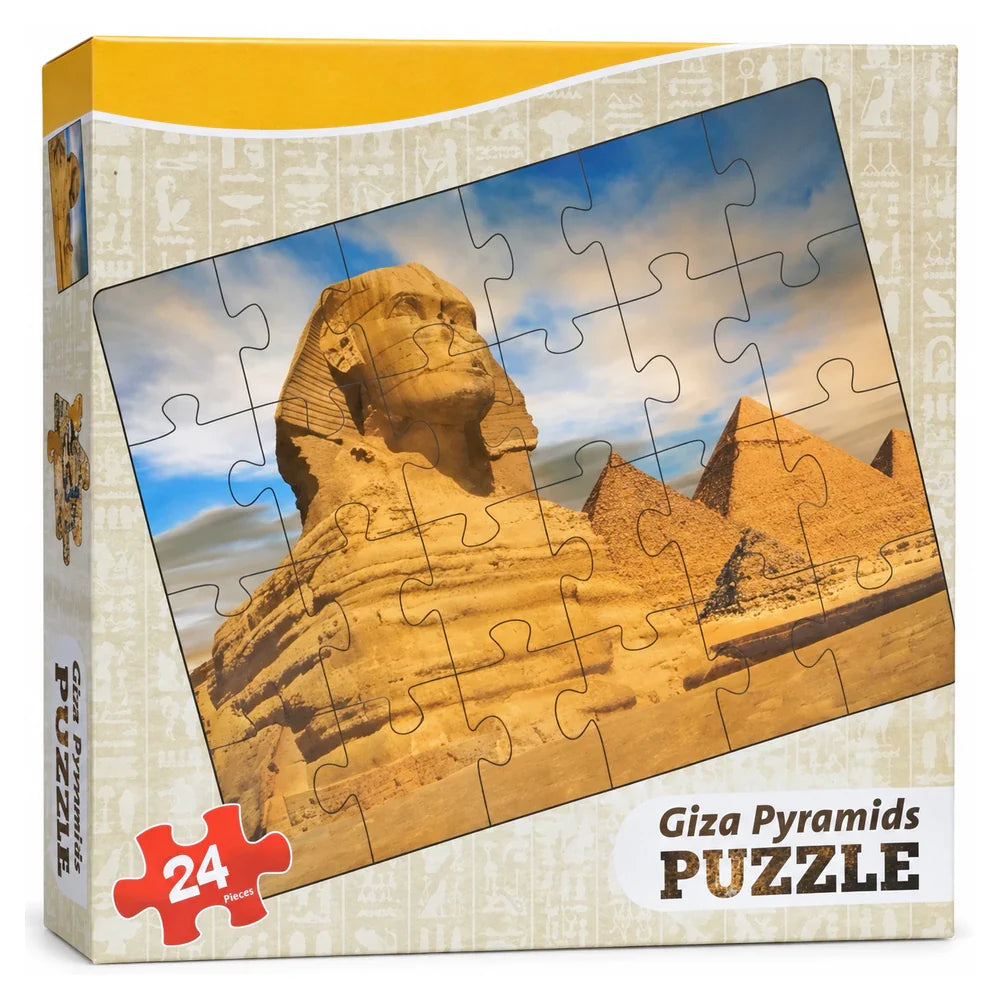
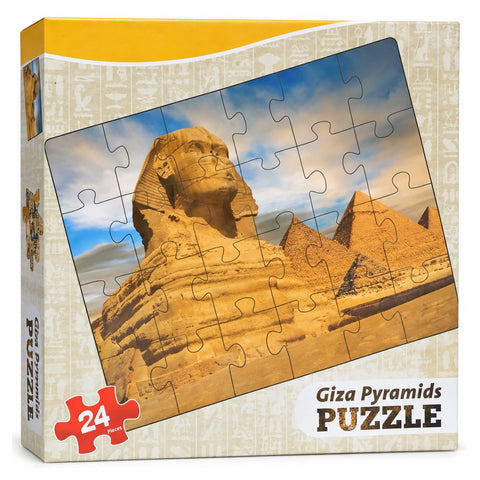
A puzzle picture can start a good conversation about a real place. Kiddil's Giza Pyramids 24-piece puzzle shows the pyramids and Sphinx and is listed for ages 3–5. You do not need to turn play into a history lesson. Pick one fact, ask what your child notices, and let them return to the picture. The place facts below come from the UNESCO World Heritage Centre's Giza and Memphis record.
Four short facts to share
- There are three famous pyramids at Giza. They are part of a much larger pyramid field extending toward Dahshur.
- The Great Pyramid is associated with Khufu. UNESCO describes it as the only surviving ancient wonder of the world.
- The Great Sphinx is in the same wider heritage area. Ask your child to find it in the puzzle picture.
- These places are part of Egypt's heritage. UNESCO inscribed Memphis and its Necropolis, including the Giza pyramid fields, on its World Heritage List in 1979.
Keep explanations short for a preschooler. If they ask how every stone was moved, it is okay to say researchers are still studying construction details; UNESCO notes that the Great Pyramid's design remains a subject of research (UNESCO).
Five activities around the picture
- Look and name: before fitting pieces, find sky, sand, pyramids and Sphinx. Let your child use their own words.
- Sort one feature: group sky-coloured pieces or edges, then try fitting only those. If sorting feels tedious, skip it.
- Build a shape: with paper or large safe blocks, make a triangular outline. Talk about tall, short, next to and behind. NAEYC recommends spatial words and block play for preschoolers (NAEYC).
- Draw after finishing: ask your child to draw one thing they remember from the picture. It need not be accurate art.
- Tell a visit story: “What would you look at first?” If you actually visit, use current official visitor information separately; this article does not give ticket or opening details.
Keep the play age-appropriate
The puzzle is listed for ages 3–5. Follow its package age and keep pieces out of reach of younger children. The CPSC toy safety page advises keeping small parts away from children under three. A child does not need to memorise names or dates to enjoy a familiar Egyptian landmark.
For the jigsaw method, read how to start a 24-piece puzzle. For exact-set care and a first-week routine, see the Giza puzzle parent guide.
Questions parents ask
Is the Sphinx a pyramid?
No. It is a separate monumental sculpture in the Giza area. Point it out in the picture (UNESCO).
Do I need to explain ancient Egyptian history in detail?
No. One accurate fact and a child's own question are enough for a short play session.
Can this replace a visit?
A puzzle is a picture and an invitation to talk; seeing the site is a different experience.
Toys in this guide
Check each toy's age, contents and warnings before choosing. Prices and availability come from the store.
About Kiddil: an online shop for toys and children's books in Egypt, for ages 0 to 12. Delivery to every governorate (EGP 50, free from EGP 1,500), cash on delivery and 14-day returns. All toys · Children's books