



Baby Teething: When Teeth Start, Symptoms and Safe Ways to Help
Published · Kiddil
Many babies get their first tooth at about six months, but the timing varies. Some start earlier, some after their first birthday. Drooling or putting hands in the mouth at three months does not by itself mean a tooth is coming: babies also explore with their mouths. The first teeth are usually the lower front pair (NHS teething guide; American Academy of Pediatrics).
What are common teething signs?
A sore, red patch of gum where a tooth is coming through, more drool, chewing or gnawing, a flushed cheek, extra fussiness and a few unsettled nights can happen. Some teeth arrive with little or no discomfort. The NHS says a baby's temperature can be slightly raised but below 38°C; this is different from a true fever (NHS).
Do not explain away a fever or diarrhoea as teething. The NHS finds no evidence that teething causes diarrhoea, and the AAP says teething does not cause fever or diarrhoea. If your baby has a temperature of 38°C or higher, diarrhoea, seems ill, is not feeding as usual, or has symptoms that worry you, contact a doctor rather than assuming it is a tooth (NHS; AAP).
When do the teeth usually appear?
This is a rough order, not a deadline. The NHS lists the front middle teeth around six months, the teeth next to them around eight months, first molars around 12 months, canines around 18 months and second molars around 24 months. The bottom teeth often arrive before the matching upper teeth. Most children have their baby teeth by about age two to three (NHS). If you are concerned about your child's teeth or growth, ask their doctor or dentist.
How can I soothe sore gums safely?
- Wash your hands and gently rub the sore gum with a clean finger (US Food and Drug Administration).
- Offer a firm rubber teething ring to chew under supervision. Cool it in the fridge if the product instructions allow, but do not freeze it: a very hard, frozen ring can hurt the gum. Avoid liquid-filled teethers (FDA).
- Pause and comfort the baby. If discomfort is severe or persistent, ask your child's clinician which pain relief, if any, is appropriate; do not guess a dose.
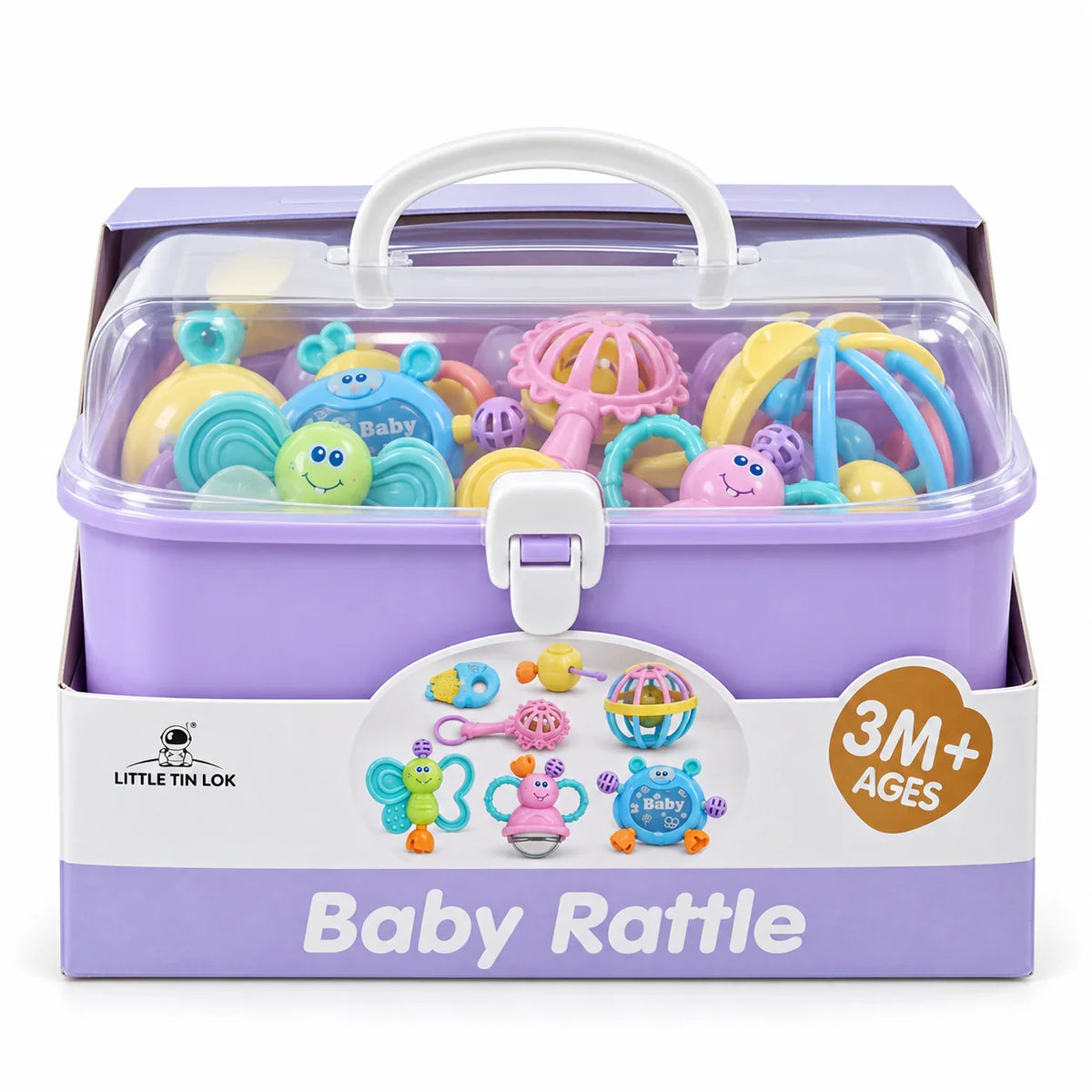
Kiddil's Baby Rattle and Teether Set has soft silicone mouthing pieces and is labelled for three months and up. Check every piece for damage and follow its package instructions. A teether can offer something safe to chew; it does not treat an illness or make teeth appear sooner.
What should I avoid?
The FDA warns against teething gels or creams containing benzocaine or lidocaine, homeopathic teething tablets, and amber or other teething jewellery. Numbing medicines can have serious side effects and offer little benefit on gums; necklaces and beads can cause choking or strangulation. Do not tie a teether around your baby's neck. A firm, supervised teether or clean-finger gum massage is safer (FDA).
What changes after the first tooth?
Start brushing twice a day when the first tooth appears, using a tiny smear of fluoride toothpaste about the size of a grain of rice. The AAP advises a first dental visit by the first birthday or within six months of the first tooth (AAP oral-health guidance). For other play ideas during the first year, see baby toys and play by month.
Questions parents ask
When does a baby start teething?
Often around six months, but the first tooth can appear earlier or after 12 months. The bottom front teeth usually come first (NHS; AAP).
Does teething cause a fever?
Teething may coincide with a slight temperature rise below 38°C, but a fever of 38°C or higher needs another explanation. Ask a doctor rather than assuming it is teething (NHS; AAP).
Does teething cause diarrhoea?
No evidence supports diarrhoea as a teething symptom. If your baby has diarrhoea, assess it as an illness rather than treating the gums (NHS).
Can I freeze a teething ring?
Do not freeze it. The FDA recommends a firm, non-liquid-filled ring and warns that a frozen ring can be too hard on a baby's gums (FDA).
Are amber teething necklaces safe?
No. The FDA reports choking and strangulation injuries from teething jewellery and recommends avoiding it (FDA).
About Kiddil: an online shop for toys and children's books in Egypt, for ages 0 to 12. Delivery to every governorate (EGP 50, free from EGP 1,500), cash on delivery and 14-day returns. All toys · Children's books