


Layering Puzzles for Five-Year-Olds: What Goes on Top?
Published · Kiddil
How we research toy and book guides
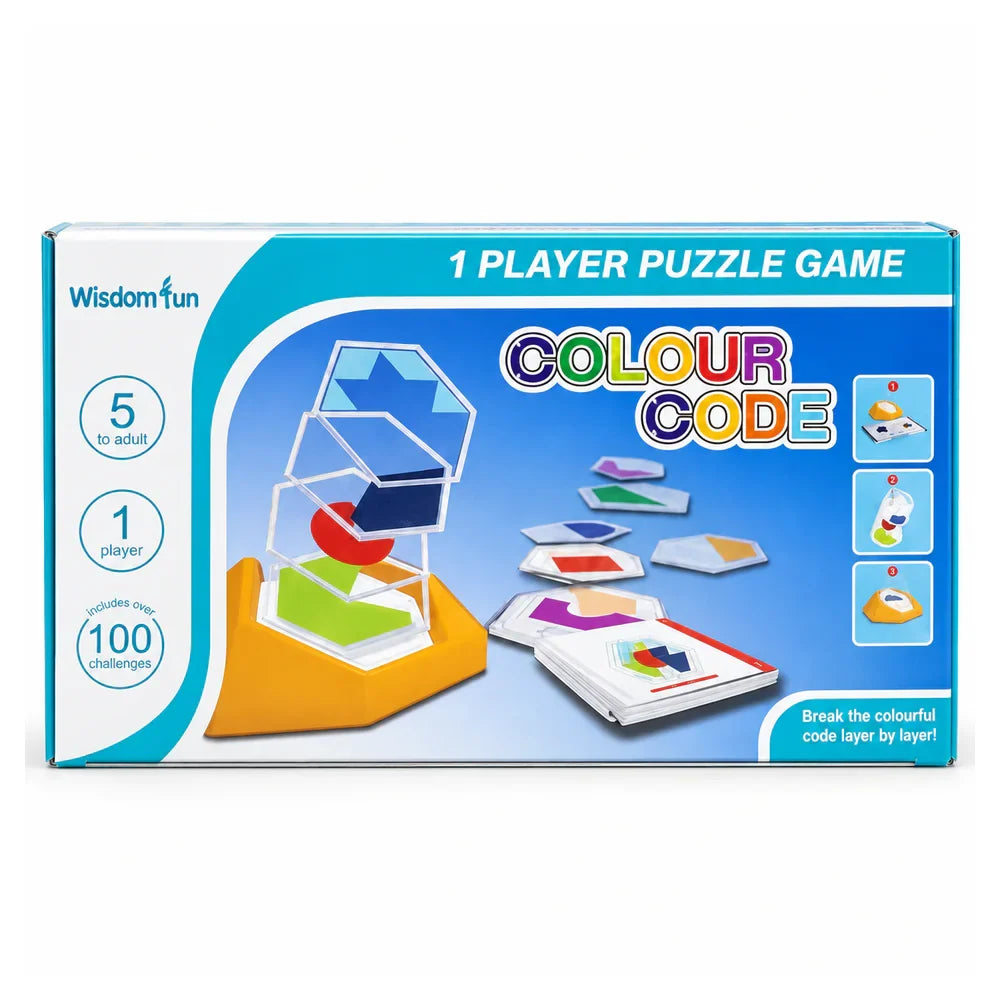
A layering puzzle asks two questions: which pieces belong in the picture, and in what order should they sit? For a five-year-old, separate those questions. First identify a few visible shapes, then test what changes when one tile goes in front of another. This makes the effect of order easier to see without adding a race or demanding that the whole picture be solved mentally.
Before you begin
Choose a set with a package age that includes five, a simple starting picture and a clear base. Keep unneeded tiles aside. Check the instructions for which face or orientation is allowed, and avoid mixing tiles from different sets.
Find the visible parts before stacking
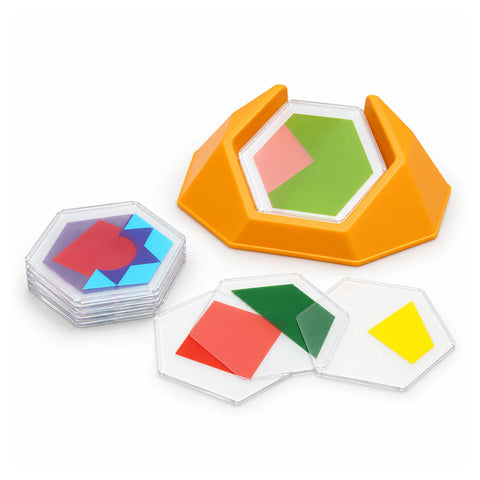
Look at the target and name or point to the shapes and patterns you can see. Pick a small number of candidate tiles and compare them beside the picture. Do not assume that every visible region needs a separate tile; the supplied puzzle may build the image through overlap. Keep the task anchored to the actual example.
Change order while keeping pieces the same
Stack two chosen tiles and inspect what is hidden. Swap only their order and compare again. Ask “Which part appeared?” rather than “Is that right?” This gives the child a specific change to notice. Use more tiles only after the two-tile comparison is clear and the child wants to continue.
Compare one area of the finished picture
Put the model beside the attempt and compare a corner, a stripe or one shape. If it differs, decide whether the problem is a missing piece, a wrong orientation or the order. Change one possibility and inspect the result. Avoid dismantling a partly useful stack before the child has had a chance to understand the mismatch.
When the first attempt does not work
If the target is too visually busy, choose an easier supplied challenge or explore two tiles without a target first. If glare makes the picture difficult to inspect, change the viewing position or lighting. Do not interpret trouble seeing an overlap as an unwillingness to think.
Try the idea with things at home
Use two large adult-prepared paper shapes and overlap them on a plain sheet. Swap which one sits on top and draw the outline you can see. This demonstrates order without pretending paper has the same transparency or mechanics as a commercial tile set.
Examples from Kiddil’s toy range
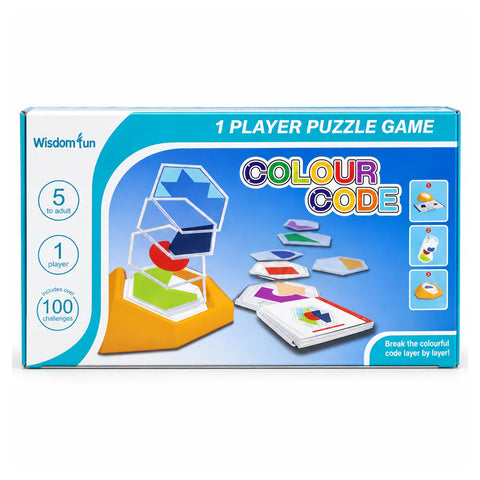
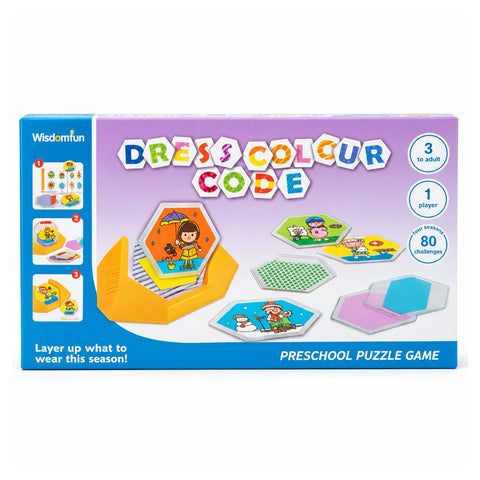
Colour Code uses transparent geometric tiles; Dress the Character uses layered patterns to build an outfit picture. Both listings cover ages 5–7. Follow the particular challenge’s instructions and avoid treating the larger challenge count as proof of a better fit.
- Colour Code Stacking Puzzle — ages 5–7.
- Dress the Character — ages 5–7.
Check the package age and safety instructions before use.
Questions about this activity
Should the child choose tiles and order together?
You can separate them while learning: explore candidate pieces first, then their order. Return to the full challenge when that is enjoyable.
Are these colour-mixing lessons?
Use the set’s stated task. Layering shapes and hiding parts is not automatically the same as a lesson in paint or light mixing.
Choose your next step
- Planning Games for Five-Year-Olds: Pack and Check
- Shape Rotation Games for Five-Year-Olds
- The main guide for this topic
- Browse available toys
- All toy and game parent guides
Related expert background: Source and background. These activities are Kiddil editorial suggestions, not a developmental test or an outcome guarantee.
Toys in this guide
Check each product's age, contents and instructions before choosing. Prices and availability come from the store.

About Kiddil: an online shop for toys and children's books in Egypt, for ages 0 to 12. Delivery to every governorate (EGP 79, free from EGP 1,500), cash on delivery and 14-day returns. All toys · Children's books