



Brain Games for Kids by Age: 2, 3, 4–5, 6–7 and 8+
Published · Updated · Kiddil
In short: a good brain game is “hard but possible” and grows with the child through levels. Below: what fits each age, a quick table of picks, and every toy shows the age printed on its box.
Brain games by age — quick table
| Age | Type of game | Examples |
|---|---|---|
| 2 | Shape sorting and matching | Baby’s First Blocks (16 pieces), Fishing and Shape Board |
| 3 | Shapes and simple patterns | 15-shape Sorter Box, Block Fitting Tray |
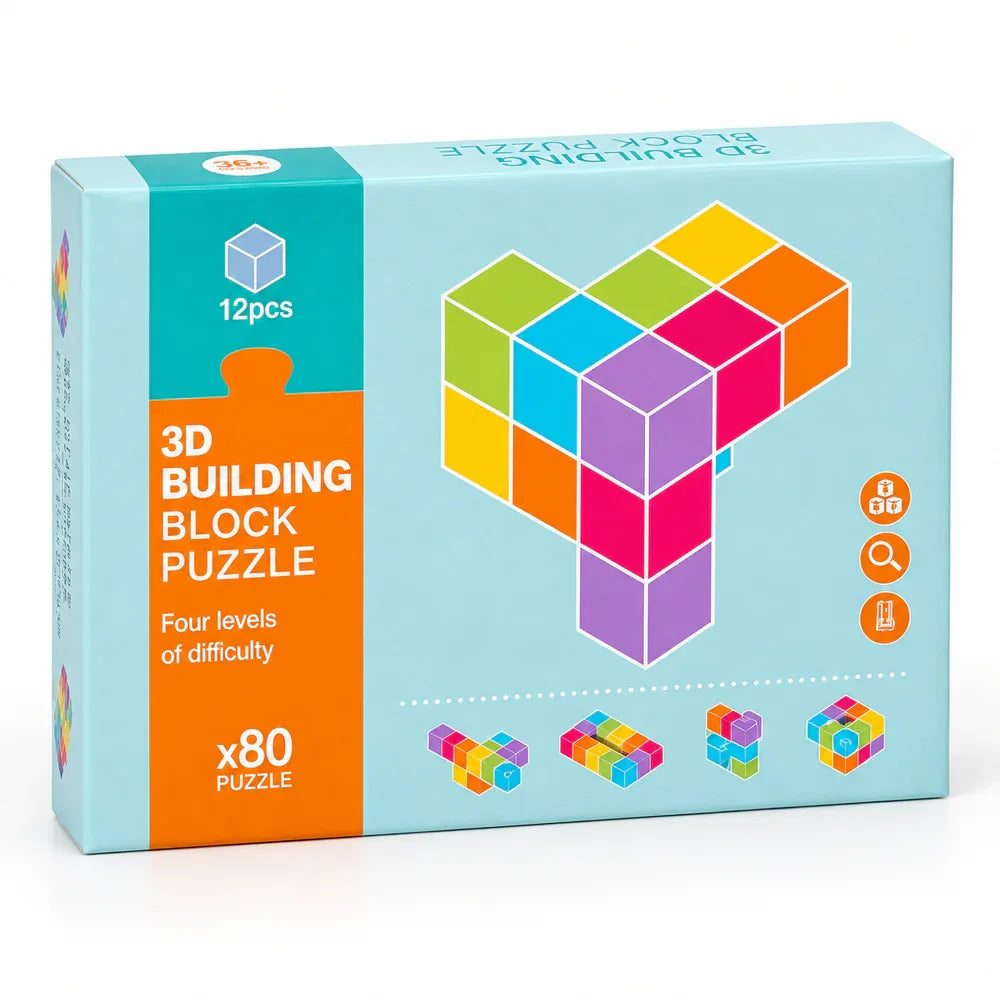
| 4–5 | Puzzles with graded challenge cards | 3D Wooden Block Puzzle (80 challenges), Pattern Logic Board, Triangle Tangram |
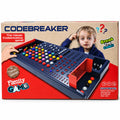
| 6–7 | Deduction and planning | Codebreaker, Dinosaur Path Puzzle (36 levels), Cats and Mice |
| 8+ | Harder logic puzzles | Klotski sliding puzzle, Path Building Logic Puzzle, 4×4 speed cube |
Brain games for 2-year-olds
At two, “thinking” means finding where something goes: turning a piece until it fits and matching colour to shape. Start with a few big pieces and add more once they’re mastered.
Brain games for 3-year-olds
Now a child can hold one goal and finish it: a sorter with more shapes, or a tray where every shape must fit with no gaps. Self-correcting toys are ideal here.
Brain games for 4 and 5-year-olds
This is the age of challenge cards: each card shows a shape or pattern to copy, and the levels climb gradually. Do the first card together, then let them go on alone.
Brain games for 6 and 7-year-olds
They can plan a few moves ahead and reason from clues. Two-player deduction games like Codebreaker teach them to think about someone else’s thinking; single-player levelled puzzles teach patience.
Brain games for 8 to 10-year-olds
The challenge has to be real: sliding puzzles, routes to build, speed cubes with a method to learn. If they love competition, Block Pattern Duel takes up to four players.
Keeping the challenge right
- Watch the child, not a score: choose a challenge they can try with interest. If they are stuck or frustrated, offer a small hint or an easier level; add difficulty when they are ready.
- Don’t give the answer: ask “what have you tried?” or give a small hint.
- Rotate puzzle types: shapes, then routes, then deduction — each works a different part of thinking.
- Hands-on play: a puzzle gives the child a chance to practise attention and problem solving with you. See screen-free brain teasers.
Everything is in brain teasers and logic games and problem-solving toys.
Frequently asked questions
What’s the best brain game for a 3-year-old?
A shape sorter or a block-fitting tray: a clear goal, self-correcting and sized for small hands.
What’s the best brain game for a 6-year-old?
A two-player deduction game like Codebreaker, or a levelled single-player puzzle like the Dinosaur Path Puzzle.
Do brain games really make children smarter?
They train skills such as planning, focus, spatial thinking and trial-and-error problem solving. What matters most is that they are fun and played often.
Read next: Focus and concentration games by age; supporting thinking and learning through everyday play.
About Kiddil: an online shop for toys and children's books in Egypt, for ages 0 to 12. Delivery to every governorate (EGP 50, free from EGP 1,500), cash on delivery and 14-day returns. All toys · Children's books