



How to Support Your Child's Thinking and Learning Through Play
Published · Kiddil
Parents often search for ways to “make a child smarter”. A toy cannot promise a higher IQ. A more useful goal is to give a child chances to practise language, attention, memory, planning, curiosity and problem solving. Research and guidance from Harvard's Center on the Developing Child and the American Academy of Pediatrics (AAP) put responsive relationships and play at the centre of early learning (Harvard on serve and return; Harvard's play-by-age activities; AAP on the power of play).
Start with the back-and-forth, not a toy
Watch what your child notices. If a baby points, name the object and wait for their sound or gesture. If a toddler asks “why?”, answer simply and ask what they think. Harvard calls these responsive exchanges “serve and return”: the child starts an interaction and an adult responds. This supports early language and social foundations for later thinking (Harvard). You can do it while dressing, cooking or walking.
Play ideas by age
Babies: notice, respond and explore
Try peekaboo, a song with pauses, or naming what the baby sees and touches. Let the baby look, reach and respond in their own way. UNICEF suggests simple homemade activities and says children do not need expensive toys to play and learn. Keep objects and the play space safe for your baby's current stage (UNICEF home-play ideas; Harvard). For a month-by-month list, see baby play by month.
Ages one to two: repeat and change one thing
Put objects in a box and take them out; sort two shapes; build a low tower and rebuild it. Let the child try before you show how. Ask “Where could this go?” and offer a hint. The AAP includes simple cause-and-effect play, blocks and pretend actions as ways children learn through play (AAP). A cardboard box and safe household objects are enough.
Ages three to five: pretend, build and explain
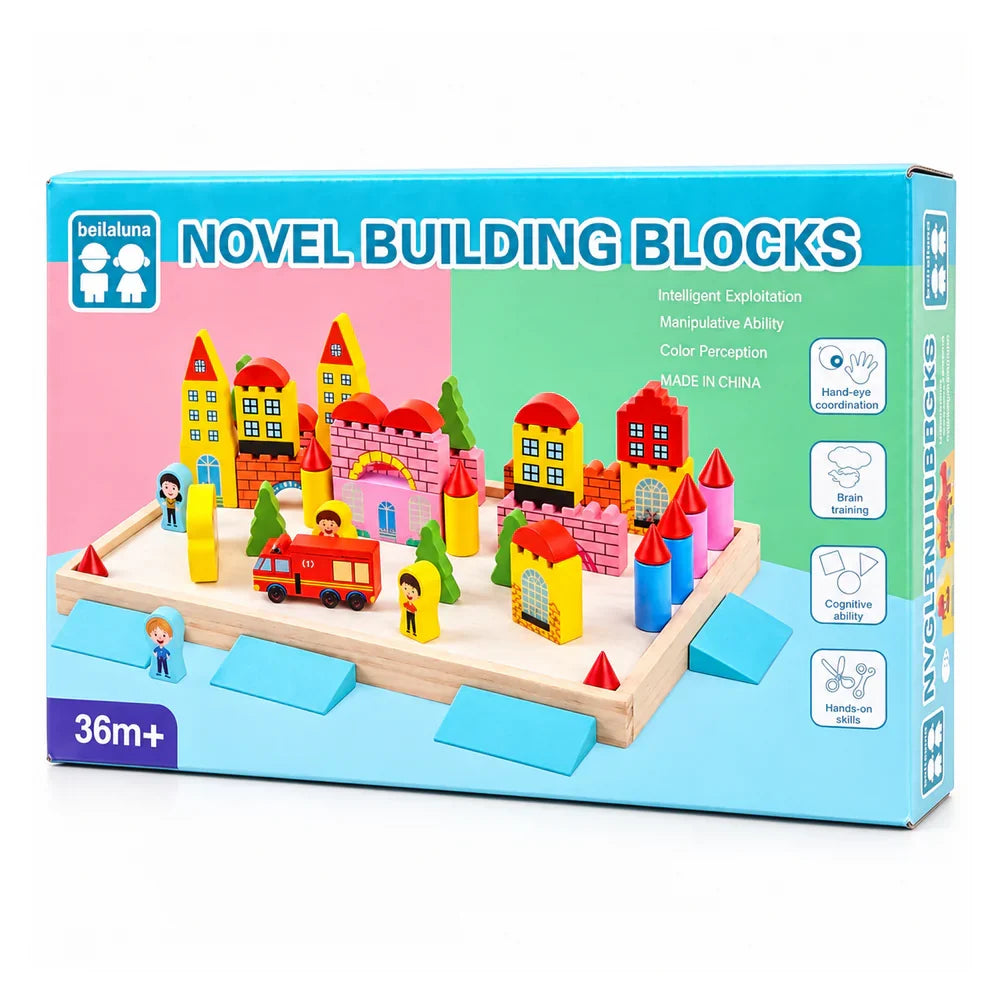
Play a shop, build a bridge and test whether a toy can cross, or tell a story together with a different ending. Ask “What could we try next?” instead of giving the answer. Harvard's play activities use games to practise attention, working memory and basic self-control, while the AAP links pretend play with language and social learning (Harvard; AAP). If you want a reusable building set, Kiddil's Wooden City Blocks is labelled for ages three to six. The box age matters; it does not measure or raise IQ.
Ages six and up: plan, test and talk through mistakes
Try a board game with rules, a puzzle with several possible approaches, or a real-world project such as planning a small garden. Ask the child to explain a plan, test it and change it if needed. Make the challenge interesting rather than turning every game into a test. For age-matched puzzle examples, see brain games by age and focus games by age.
A simple everyday pattern
- Notice: follow the child's question or interest.
- Try: give them space to handle the puzzle or idea.
- Talk: ask what they noticed and what they might change.
- Repeat: come back another day, adding a small new challenge if the child is ready.
This is a flexible routine, not a measured programme or a promise about test scores. Choose books, drawing, movement, pretend play and social games as well as puzzles. If you are concerned that your child is missing a developmental skill, use the CDC's age-specific milestone checklists and discuss concerns with a clinician; a toy cannot replace an assessment (CDC developmental milestones).
Questions parents ask
How can I develop my baby's intelligence?
Talk, sing, respond to gestures and play simple back-and-forth games. These interactions support early learning and communication; no special “IQ toy” is required (Harvard; UNICEF).
What can I do with a two-year-old?
Try stacking, sorting, pretend play and naming what you see together. Follow their interest, then change one small part of the game. The adult's responsive participation matters more than a complex toy (AAP; Harvard).
Do brain games raise IQ?
Do not assume an IQ increase. Harvard describes play as practice for specific skills such as attention, working memory and self-control. Choose a game for enjoyment and an appropriate challenge, not a score claim (Harvard).
Does my child need expensive educational toys?
No. UNICEF gives examples made from ordinary items at home. Books, conversation and play with a caring adult offer many learning opportunities (UNICEF; Harvard).
When should I ask about development?
If your child misses milestones, loses a skill or you have a concern, talk with their clinician and ask about developmental screening. The CDC checklists are a conversation tool, not a diagnosis (CDC).
About Kiddil: an online shop for toys and children's books in Egypt, for ages 0 to 12. Delivery to every governorate (EGP 50, free from EGP 1,500), cash on delivery and 14-day returns. All toys · Children's books