



Focus and Concentration Games for Kids by Age, and How to Help Your Child Concentrate
Published · Kiddil
In short: concentration is a skill children build, and they build it through play. Games that ask a child to remember something, to wait, or to switch to a new rule train the brain skills behind attention (Harvard Center on the Developing Child). Enough sleep, less screen time and daily active play help too. Every child is distractible sometimes; if focus problems are constant and get in the way at school and at home, talk to the doctor.
What "focus" is made of
Researchers call the skills behind focus "executive function". There are three: working memory, holding information in mind and using it; self-control, resisting distractions and impulses and stopping to think; and flexible thinking, switching when the rules or the plan change. Children aren't born with these skills, only the potential for them; they grow slowly from infancy into early adulthood, with a burst between three and five (Harvard).
How long can children concentrate?
There is no official "minutes per year of age" rule; the one often quoted online doesn't come from any health authority. What the sources do say: an eight-month-old spends two or three minutes with one toy, and by twelve months up to about fifteen (AAP). By five, most children pay attention for 5 to 10 minutes during a story or a craft, and screen time doesn't count (CDC).
Focus games by age
From Harvard's guide to executive function activities. Choose games that are a stretch but not frustrating, and let your child do more of the leading as they get better.
6 to 18 months
- Peek-a-boo, pat-a-cake and knee-bounce rhymes.
- Hiding games: a toy under a cloth, then moved to a new hiding place.
- Copying games, and naming whatever your baby is looking at, which helps them keep their attention on it.
- Toys: ring stackers like the Fish Ring Stacker (ages 0–1).
18 months to 3 years
- Freeze dance and stop-start songs: moving, then stopping when the music stops, practises self-control.
- Follow the leader, and matching and sorting by colour, shape or size.
- Simple puzzles: ask which piece is needed next.
- Toys: Matching Eggs and Baby’s First Blocks (ages 1–3).
3 to 5 years
- Pretend play with a plan made before starting, and telling stories together.
- Sorting with a rule that changes: by colour, then by shape.
- Obstacle courses, fast-and-slow dancing, and harder puzzles.
- Cooking together, where measuring and counting need attention.
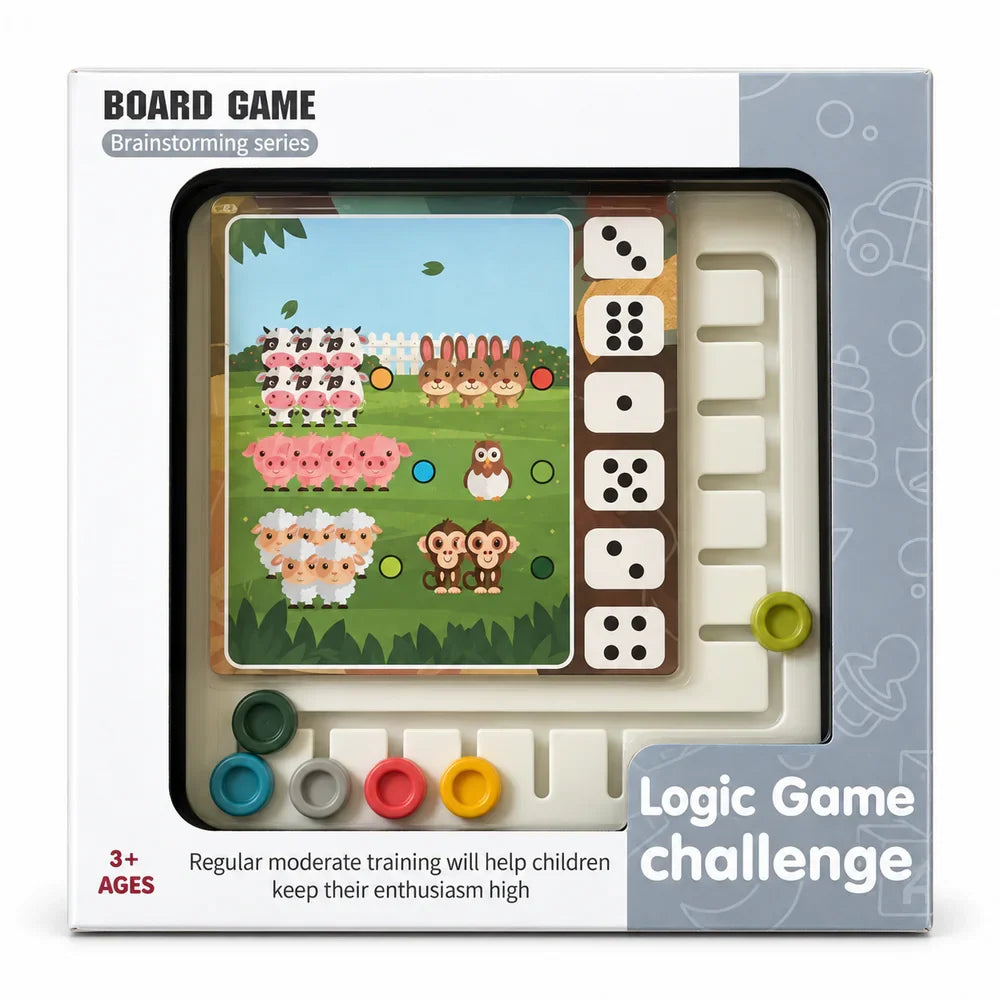
- Toys: the Pattern Logic Board (ages 3–5), the Pocket Sliding Maze (ages 3–5) and jigsaw puzzles like the Farm Animals Jigsaw Puzzle (ages 3–5).
5 to 7 years
- Card games: memory pairs, Snap and colour-matching games.
- Moving games with rules: Simon Says, red light green light, musical chairs.
- Quiet games: I Spy, mazes and logic puzzles.
- Toys: the Colour Sequence Card Game (ages 3–8), the Cube Pattern Duel (ages 3–8) and the Lens Frame Observation Puzzle (ages 5–7).
7 to 12 years
- Strategy games like chess, and card games with more rules.
- Crosswords, sudoku and puzzle cubes.
- Sport, music and dance.
- Toys: the Codebreaker (ages 6–8), the Klotski Sliding Block Puzzle (ages 8–10) and the Speed Cube 4x4 (ages 6–8).
All our focus toys are in focus and concentration games, and there are more ideas in brain games by age.
How to help your child focus on homework
- A quiet, fixed place for homework, with the TV and phones off (AAP).
- Short blocks with breaks: for example 15 to 20 minutes, then a short break (NHS), and a stretch or some movement before sitting down.
- Break big tasks into small steps, use a checklist or a timer, and give one clear instruction at a time (AAP; NHS).
- Talk to the teacher if your child is struggling (AAP).
Sleep, screens and movement
- Sleep: enough sleep helps children stay focused and concentrate; children who don't get enough are more likely to have attention and behaviour problems. Children aged 6 to 12 need 9 to 12 hours (CDC).
- Screens: none before two, and no more than an hour a day from two to five, with an adult (CDC).
- Movement: physical activity improves children's attention and memory; from six, the CDC recommends an hour or more of active play every day (CDC).
Distractibility or ADHD? When to talk to the doctor
It is normal for children to have trouble focusing and behaving at times. With ADHD, the problems don't go away as the child grows; they continue, can be severe, and cause difficulty at school, at home or with friends (CDC). If you're concerned, the first step is to talk to your child's doctor. There is no single test: diagnosis takes several steps, including hearing and vision checks, because other problems can look similar (CDC). Games like these help every child practise focus, but they are not a treatment for ADHD.
Questions parents ask
How do I help my child concentrate on homework?
A quiet, fixed place with screens off, short work blocks with breaks, big tasks broken into steps, and a timer or checklist. Enough sleep and daily active play help too.
How long should a 5-year-old be able to concentrate?
Most five-year-olds pay attention for 5 to 10 minutes during a story or a craft (CDC). There is no official minutes-per-year rule.
What are good focus games for a 3-year-old?
Freeze dance, simple puzzles, sorting by colour and then by shape, and pretend play planned before it starts (Harvard).
Do focus games treat ADHD?
No. They help any child practise attention, but ADHD is diagnosed and treated by professionals. If focus problems are constant and affect school and home, talk to the doctor.
Does screen time affect my child's concentration?
Screens can crowd out the sleep and active play that support attention. The CDC recommends no screens before two, and no more than an hour a day from two to five with an adult.
About Kiddil: an online shop for toys and children's books in Egypt, for ages 0 to 12. Delivery to every governorate (EGP 50, free from EGP 1,500), cash on delivery and 14-day returns. All toys · Children's books