


Number Games: Make a Total or Build Equal Groups?
Published · Kiddil
How we research toy and book guides
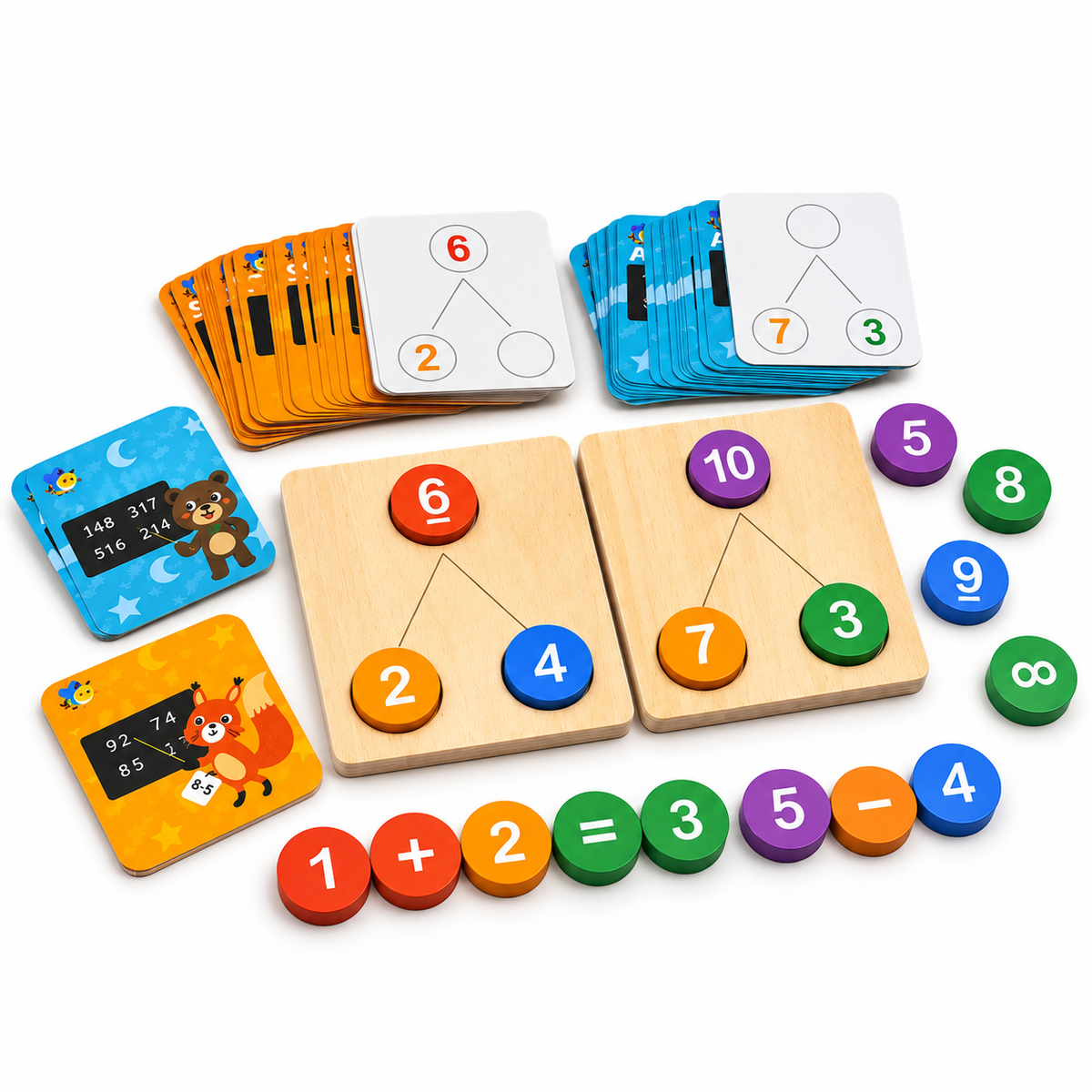
A number-composition game asks “Which parts make this total?” A multiplication activity asks “How many equal groups, and how many in each?” They use different questions even when both boxes contain counters and boards. Choose the task your child is exploring, then check the age on the exact product.
What is number composition?
Take five drawn dots. Put two in one circle and three in another. The parts are different, but together they still make five. Move one dot from a group to the other and compare again. The important conversation is about the unchanged total and the changing parts, not finishing a worksheet quickly.
The National Centre for Excellence in the Teaching of Mathematics explains number composition through splitting and recombining quantities. Our paper activity below is an editorial example; the source does not endorse a toy.
How are equal groups different?
Draw three circles with two dots in each. Now you are describing three equal groups, each containing two. Compare that with two circles of three dots: both drawings contain six, but the grouping is different. Ask the child to point to the groups and tell you how many are in each before introducing a written sum.
NCETM’s equal-group teaching material distinguishes the number of groups and the size of a group. You can use that language without buying a board or timing an answer.
Compare the two Kiddil sets
| Choice | Listed age | Play task |
|---|---|---|
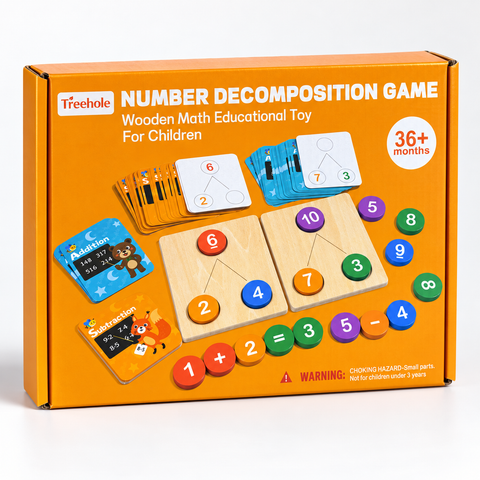
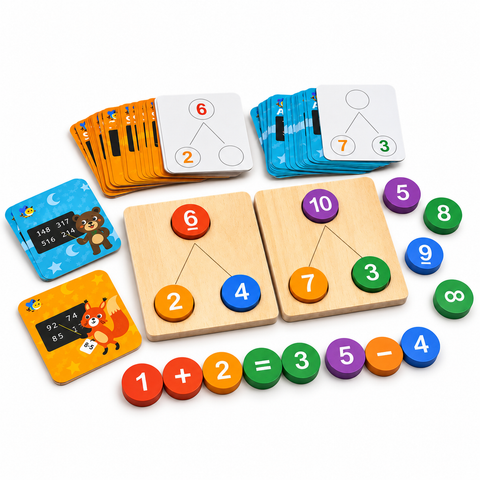
| Number Decomposition Game | 5–8 years | Two boards, numbered/operation counters and cards for representing parts of a number. |
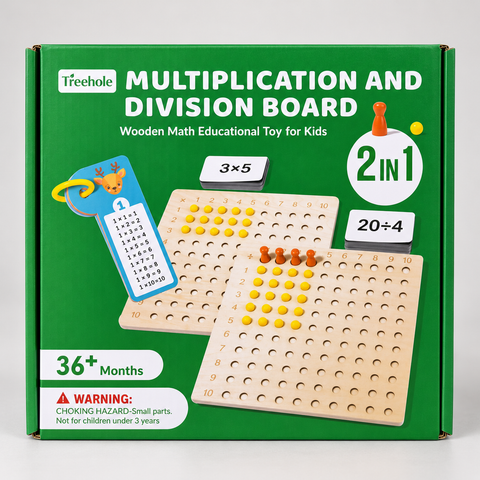
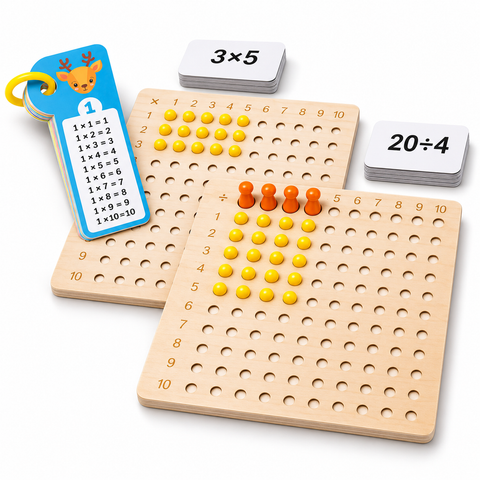
| Multiplication and Division Board | 6–10 years | Two numbered boards, counters and equation cards for modelling multiplication or division. |
These are the ages recorded for those exact sets. The guide does not recommend the small counters for younger children. Neither listing establishes an automatic link to an Egyptian school year or guarantees mastery of a table.
A paper version for each question
- Make five: draw five large marks and two spaces. Choose a split, count the parts and count the total.
- Change the split: redraw the same five as another pair of parts. Ask what changed and what stayed the same.
- Make equal groups: on a new page, draw three groups with two marks in each. Name both numbers in the grouping.
- Explain a drawing: let your child make a picture for you to describe. If they use a different grouping, talk about that picture rather than forcing the planned answer.
Keep the two questions separate at first. Paper and a pencil are enough; no loose household pieces are necessary.
What if the child only counts every mark?
Counting can be their sensible way to check. Point to one part, then the other, and invite them to describe the drawing. Use a smaller total if the picture feels crowded. Avoid changing the quantity, adding symbols and introducing a timer all at once.
Questions parents ask before choosing
Is the multiplication board the next level of the composition game?
It is a different task, not a required purchase sequence. Look at what the child is currently discussing and what the product actually includes.
Can an adult make either game easier?
Use a simple allowed activity from the actual instructions and fewer relevant pieces where appropriate. Changing the activity does not change the package age or small-parts restrictions.
For a broader starting point, read letters and numbers through play. Browse educational toys for current set details.
Examples describe the published products, not laboratory testing or a guaranteed skill outcome. Follow each package’s age, contents and warnings; keep small pieces away from younger siblings.
Toys in this guide
Check each product's age, contents and instructions before choosing. Prices and availability come from the store.
About Kiddil: an online shop for toys and children's books in Egypt, for ages 0 to 12. Delivery to every governorate (EGP 79, free from EGP 1,500), cash on delivery and 14-day returns. All toys · Children's books