



Teaching Kids Letters and Numbers Through Play, in Arabic and English
Published · Kiddil
In short: children learn letters and numbers best in short, playful moments rather than drills. Start with sounds and with counting real things, add tracing and writing later, and keep each session to about ten minutes. Most children in Egypt meet two alphabets, Arabic and English, and that is fine: teach each one through its own games.
What to expect by age five
Most children (three in four) can do these by their fifth birthday, according to the CDC's developmental milestones: count to 10, name some numbers between 1 and 5 when you point to them, name some letters, write some letters of their own name, recognise simple rhymes, and pay attention for 5 to 10 minutes during an activity. Many do more, some do less; the list is a guide, not a test.
Before letters: listening and counting
Reading starts with hearing. Rhymes, songs and noticing the first sound of a word ("ball starts with b", «بطة أولها ب») come before letters on paper. Numbers start with counting real objects, touching each one once, long before a child writes a digit.
Teaching Arabic letters through play
- Start with the letters in your child's name. They care about them, and see them every day.
- Teach each letter with its vowel. Arabic letters are read with short vowels, fatha, damma and kasra: بَ، بُ، بِ. Saying a letter with each vowel is how Arabic reading starts.
- Group letters that share a shape. ب ت ث differ only in their dots, so learning them together makes the dots the thing to notice.
- Show that letters change shape. Most Arabic letters look different at the start, middle and end of a word; point them out in words your child already knows.
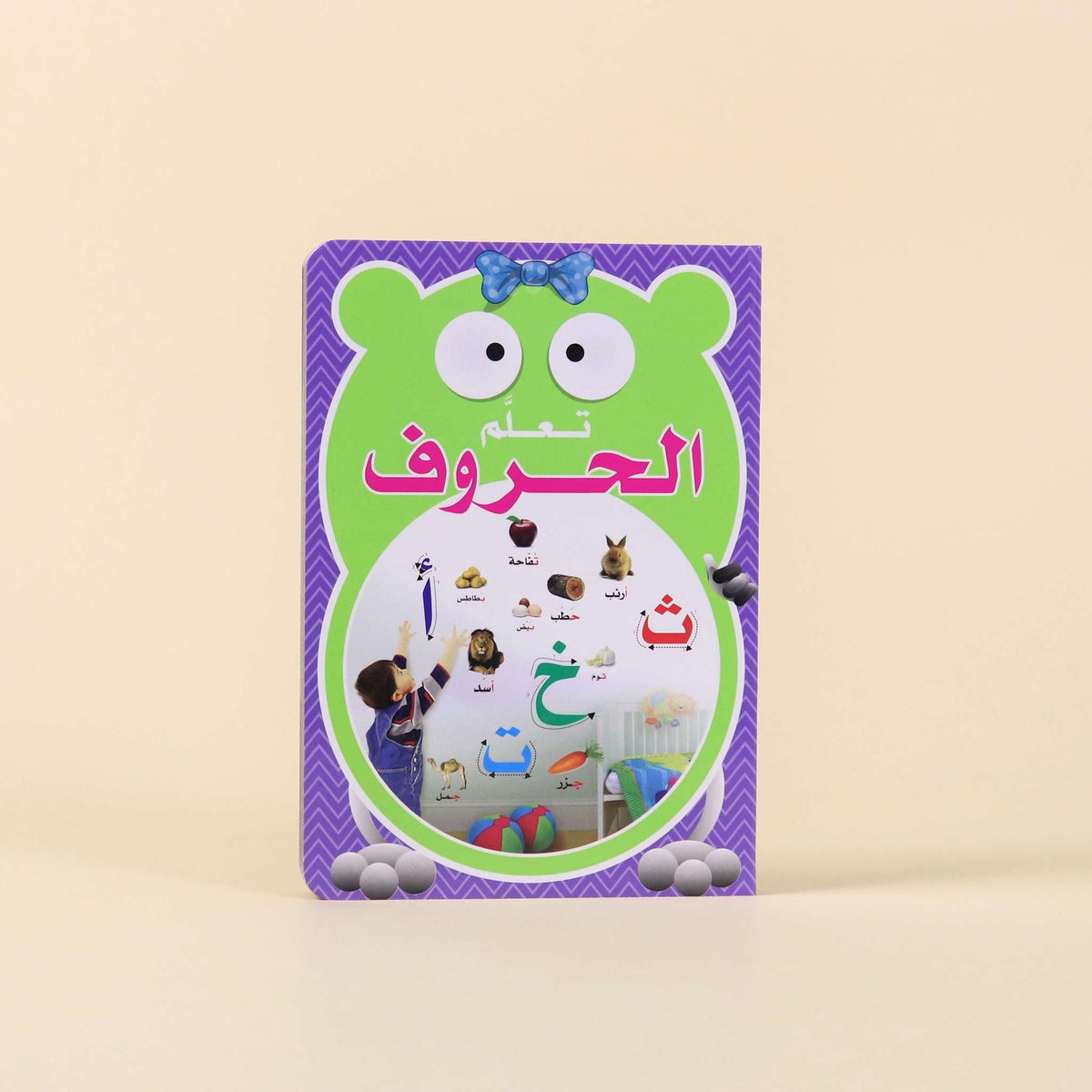
- Trace, then write. A finger first, then a marker on a write-and-wipe page: Learn Arabic Letters and Write & Wipe: Arabic Letters, Alif to Ya let a child write the same letter as many times as they like.
Teaching English letters through play
- Letter sounds before letter names. "b" as in ball helps reading more than "bee".
- Link each letter to a word. The Alphabet Animal Puzzle and the Wooden English Alphabet Flip Board put a picture behind every letter (ages 3–6).
- Match capitals and lowercase. The Ladybug Letter Match pairs A with a.
- Common words at a glance. Sight Words Swat (ages 3–8) turns the most common English words into a race.
Numbers: count first, write later
- Count real things. Stairs, grapes, cars on the street. Touch each one as you count, so your child learns that each number goes with one object.
- Recognise the digits. Fish out numbered fish with the Wooden Magnetic Fishing Game (ages 1–3), or place the numerals on the 6-in-1 Wooden Learning Board (ages 3–5).
- Then write them. Learn Numbers in Arabic shows each number up to 20 with its Arabic name, and Write & Wipe: Numbers, Arabic Edition adds a number line to 100.
- Two ways of writing numbers. Many Arabic school books in Egypt write numbers as ١ ٢ ٣, while English uses 1 2 3. Show them side by side: the same numbers in two scripts.
- Go bigger with patterns. Number Domino Blocks, with each number also written as a word, show how numbers are built up to 100 (ages 3–8).
Ten minutes a day
Short and often beats long and rare. Stop while your child still wants more, mix one letter game with one number game, and let them win sometimes. A board they can use on their own, like the Wooden Learning Easel or the Magnetic Board Set with its English letters and numbers, keeps practice going between sessions.
Where to find these toys and books
See letters and reading toys, counting and numbers toys and first-words books. For holding a pencil, read how to teach pencil grip.
Questions parents ask
At what age should a child start learning letters?
There is no single age. By five, most children name some letters and write some letters of their name; before that, rhymes, sounds, songs and play build the ground that letters sit on.
Should my child learn Arabic or English letters first?
If your child hears both languages, both can come along together. Start with the language they hear most, keep each alphabet's games separate, and don't worry if they mix them up at first.
How do I teach Arabic letters with their vowels?
Say each letter with fatha, damma and kasra (بَ، بُ، بِ) and let your child repeat it, then find the sound at the start of words they know. Short vowels are the first step to reading Arabic.
Is it normal for my child to confuse ب, ت and ث?
Yes. They share one shape and differ only in their dots, so mixing them up is expected. Learning them as a group, and pointing at the dots, helps.
Read next: Preparing your child for nursery and KG1; Teaching your child to read and write Arabic; Teaching your child English at home.
About Kiddil: an online shop for toys and children's books in Egypt, for ages 0 to 12. Delivery to every governorate (EGP 50, free from EGP 1,500), cash on delivery and 14-day returns. All toys · Children's books