



How to Teach a Child to Hold a Pencil: Grip Stages by Age and Activities That Help
Published · Kiddil
In short: a good pencil grip isn’t taught by correcting fingers; it comes when the small muscles of the hand are ready. Children pass through natural stages, from the fist grip to the tripod grip (thumb, index and middle finger) at around five to six. Your job at home: hand-strengthening play, short pencils and patience.
Pencil grip stages by age (approximate)
- About 1 to 1½ — fist grip: the pencil held in the whole hand, drawing with the arm. Completely normal.
- About 2 to 3 — fingers pointing down: fingers on the pencil with the hand turned over; movement comes from the wrist.
- About 3½ to 4 — static tripod: three (or four) fingers on the pencil, with the whole hand moving as one.
- About 4½ to 6 — dynamic tripod: thumb, index and middle finger, with the fingers moving the pencil. This is the grip to aim for by school age.
These ages are approximate; every child has their own pace, and a few months either way is normal.
Before the pencil: activities that strengthen the hand
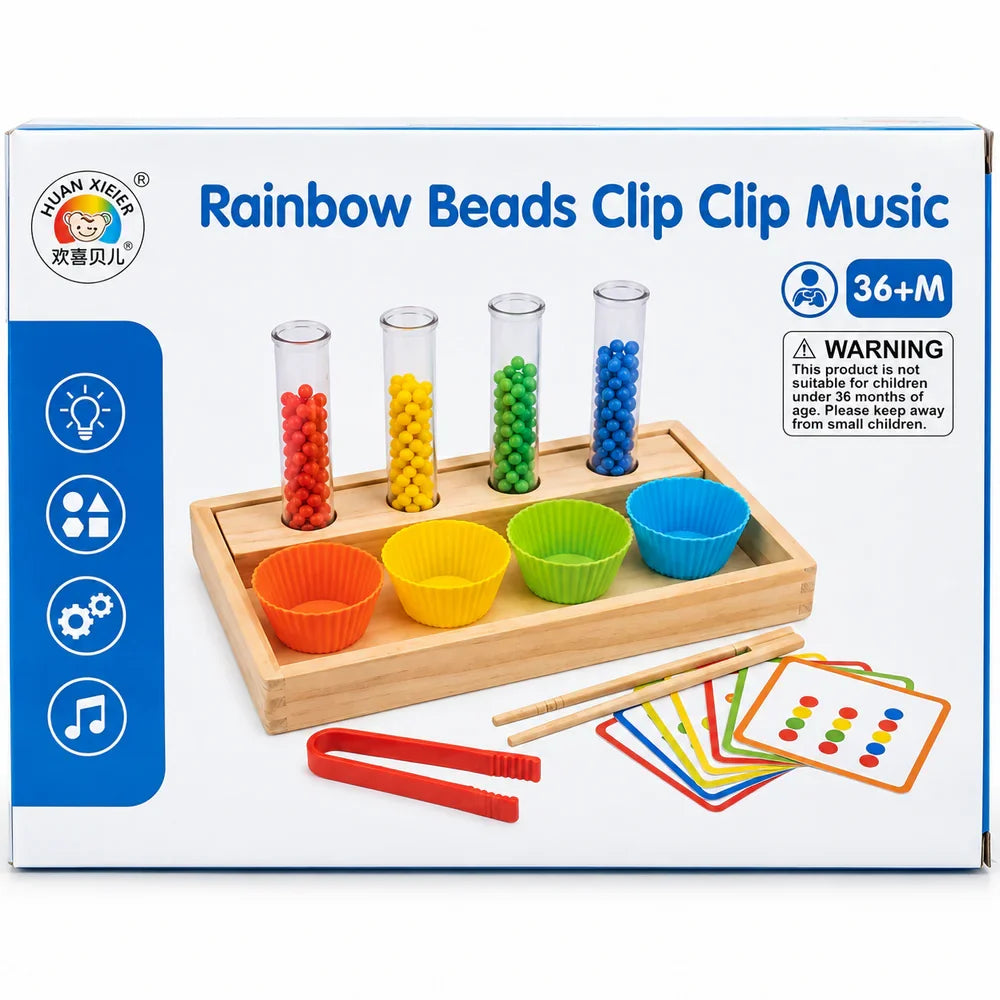
- Tweezers and beads: moving beads with tweezers trains the same fingers that will hold the pencil — like the Bead Tweezer Sorting Set.
- Threading: string through big beads, or a wooden lacing board.
- Play dough: kneading, rolling and pinching — the best finger-strength workout there is.
- Screws and nuts: twisting with the fingertips, as in the Mosaic Screw Set.
- Drawing on an upright surface: an easel puts the wrist in the right position — like the double-sided wooden learning easel.
- Stickers: peeling a sticker with the fingertips is excellent pinch practice.
Once they start holding a pencil
- Short pencils: a broken crayon or a short pencil encourages three fingers instead of a fist.
- Write and wipe: books like Write & Wipe: Arabic Letters, Alif to Ya let them repeat without running out of paper.
- Trace before writing: a finger over the letter first, as in the Montessori touch books, then the pencil.
- Good posture: feet on the floor, table at elbow height.
Common mistakes
- Writing too early: pushing letters on a two-year-old before the hand is ready.
- Constant correcting: it makes children dislike the pencil. Change the tool instead of correcting the hand.
- Very thick pencils all the time: useful at the start, but a short ordinary pencil suits the tripod grip better.
When to ask a specialist
If your child is five or six and still holds the pencil in a fist, complains of pain in the hand when writing, or avoids drawing and writing altogether, ask an occupational therapist for an assessment.
Every hand-strengthening toy is in fine motor skills toys, and there are more ideas in Montessori toys by age.
Frequently asked questions
At what age should I start teaching pencil grip?
Let them scribble from about 18 months with any grip. Focus on the proper grip from about three and a half to four, without pressure.
My 4-year-old holds the pencil wrong. What should I do?
Add more hand-strengthening play (tweezers, play dough, threading), offer short pencils and let them draw on an upright surface. Improvement comes over weeks, not days.
Read next: Teaching letters and numbers through play, in Arabic and English; Preparing your child for nursery and KG1; Teaching your child to read and write Arabic.
About Kiddil: an online shop for toys and children's books in Egypt, for ages 0 to 12. Delivery to every governorate (EGP 50, free from EGP 1,500), cash on delivery and 14-day returns. All toys · Children's books