



Montessori Toys by Age: A Parent's Guide From Baby to 6
Published · Kiddil
The Montessori method began with the Italian physician and educator Maria Montessori in the early 1900s, and its idea is simple: children learn by working with their hands on something real, at their own pace, without an adult doing it for them. So a “Montessori toy” is not a brand or a look — it is a toy with particular qualities. This guide explains what they are, and what suits each age.
What makes a toy Montessori?
- One skill at a time: stacking, sorting or threading — not ten things at once.
- It corrects itself: a piece in the wrong place will not fit, so your child sees the mistake without being told.
- Real materials: wood, fabric and metal rather than shiny plastic and loud sounds.
- The child does the work: a toy that does everything by itself turns your child into a spectator.
Montessori toys for babies (the first year)
In the first months a baby learns with eyes, hands and mouth: looking, grasping, shaking and tasting. Choose safe things that fit in one hand, such as the Baby Rattle and Teether Set from three months. Towards the end of the year come the ring stackers: the Fish Ring Stacker or the Rainbow Ring Stacking Column — at first your baby pulls the rings off and hands them to you; ordering them by size comes later.
Montessori toys for 1- and 2-year-olds
This is the put-in, take-out, bang-it age, and the right toy has one action and a result your child can see:
- The Wooden Pounding Bench — hit the ball and it drops through and rolls out.
- The Wooden Shape Sorter Truck — each shape has one hole, and the truck pulls along once it is loaded.
- The 2-in-1 Fishing and Shape Stacking Board from 18 months, and the Wooden Magnetic Fishing Game with numbers.
Montessori toys for ages 3–6
Now the hand is more precise, and your child is ready for longer work and harder challenges:
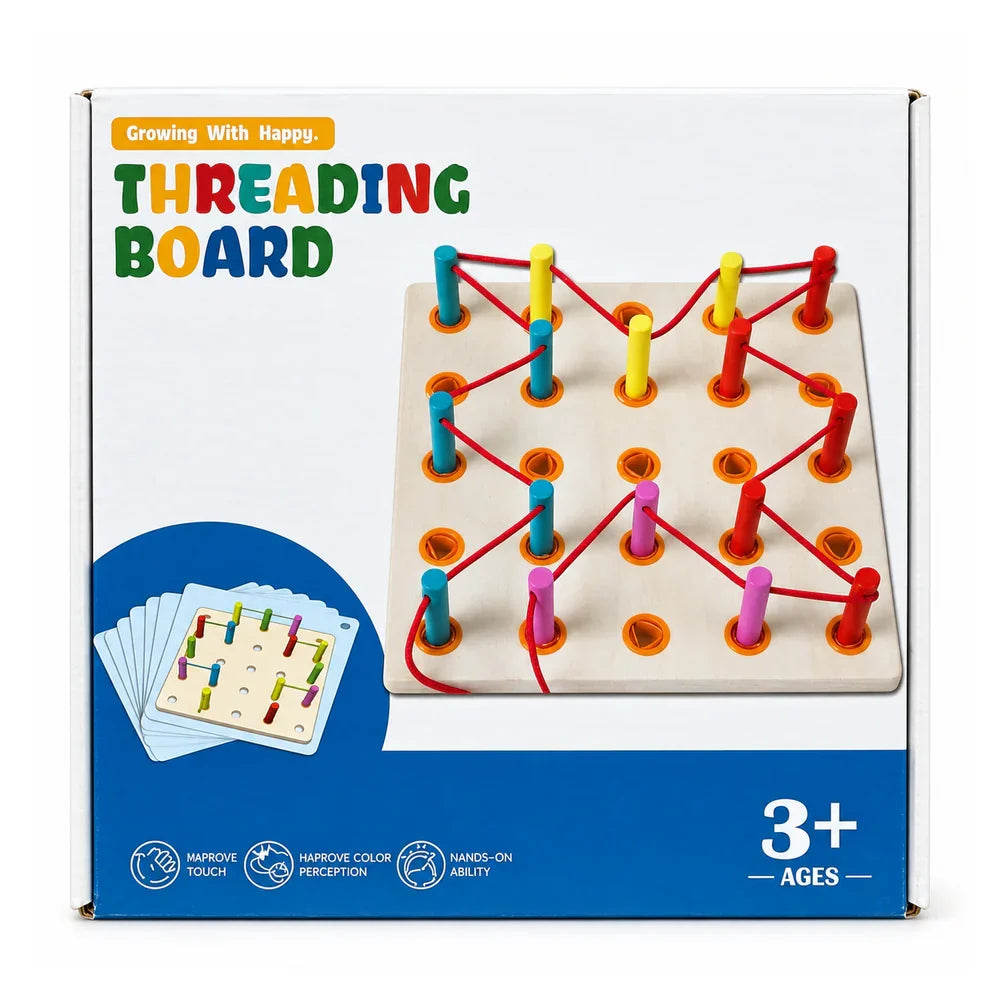
- Threading and tweezers (practical life): the Wooden Lacing Board and the Bead Tweezer Sorting Set — the same grip your child will later use to hold a pencil.
- Shapes and patterns (sensorial and early maths): Pattern Blocks, 155 pieces and the Wooden Shape Puzzle Boards with 3 graded levels.
- Language and time: the Wooden English Alphabet Flip Board and the Learning Clock with daily routine cards.
- Sorting: the Category Sorting Box with picture cards.
- Touch books: My First Montessori Touch Books (3 books) for animals, letters and numbers.
All of them are in our Montessori toys collection, each showing the age printed on its box — stick to it.
How to set up a Montessori shelf at home
- A low shelf your child can reach alone, rather than a toy box that gets tipped onto the floor.
- Four to six toys at a time, each on its own tray or in its own basket.
- Rotate every week or two: a toy that has been away comes back as new.
- Show once, slowly, then let your child try alone without correcting.
- After play, the toy goes back in its place — that is part of the activity, not a punishment.
Frequently asked questions
Do Montessori toys have to be wooden?
Not necessarily, but wood is the most common because it is heavy, natural and durable. What matters most is one skill per toy and a built-in way to see mistakes.
At what age can I start Montessori?
From birth, with very simple things: something to look at and something to hold. Real work such as threading and tweezers comes from about three.
Does Montessori help a child who gets bored quickly?
Often it does: one toy that challenges them at the right level beats ten that scatter their attention. Start with something easy they can succeed at, and raise the difficulty gradually. See also the best toys for 1- and 2-year-olds.
Read next: what Montessori, fine motor skills and other terms mean; Sensory play ideas by age; Baby toys by month.
About Kiddil: an online shop for toys and children's books in Egypt, for ages 0 to 12. Delivery to every governorate (EGP 50, free from EGP 1,500), cash on delivery and 14-day returns. All toys · Children's books