




How to Prepare Your Child for Nursery and KG1: The First Day, Goodbyes and Skills That Help
Published · Updated · Kiddil
In short: tears at nursery drop-off are normal, especially between about six months and three years, and most children settle as the routine becomes familiar. What helps most: visit beforehand, read about nursery and play it at home, keep goodbyes short and the same every day, never sneak out, and tell your child when you'll be back in words they understand. If the distress is still strong after a few weeks, talk to your child's doctor.
Is it normal for my child to cry at nursery?
Yes. Separation anxiety is a normal stage, most common from about six months to three years, and it is often a sign of a strong bond with you (NHS; UNICEF). It can ease and then come back for a while at stressful times. The CDC lists calming down "within 10 minutes" after a parent leaves, "like at a childcare drop off", among the things most children can do by three (CDC). Younger children often need longer, and that is expected.
What age do children start nursery and KG1 in Egypt?
Nurseries (الحضانات) cover the years from birth to four, and come under the Ministry of Social Solidarity. For kindergarten in government schools, the Ministry of Education's registration notice says applicants must be at least four (Ministerial Decree 154 of 1989), and first primary takes children aged six to nine (Ministry of Education). Private and international schools publish their own rules, and some, such as the Nile Egyptian Schools, count the child's age on 1 October of the school year, so check the school's own notice before you apply.
Two weeks before: getting ready
- Visit together. See the classroom and the playground, meet the teacher, and play there for a while if the nursery allows it (AAP; UNICEF).
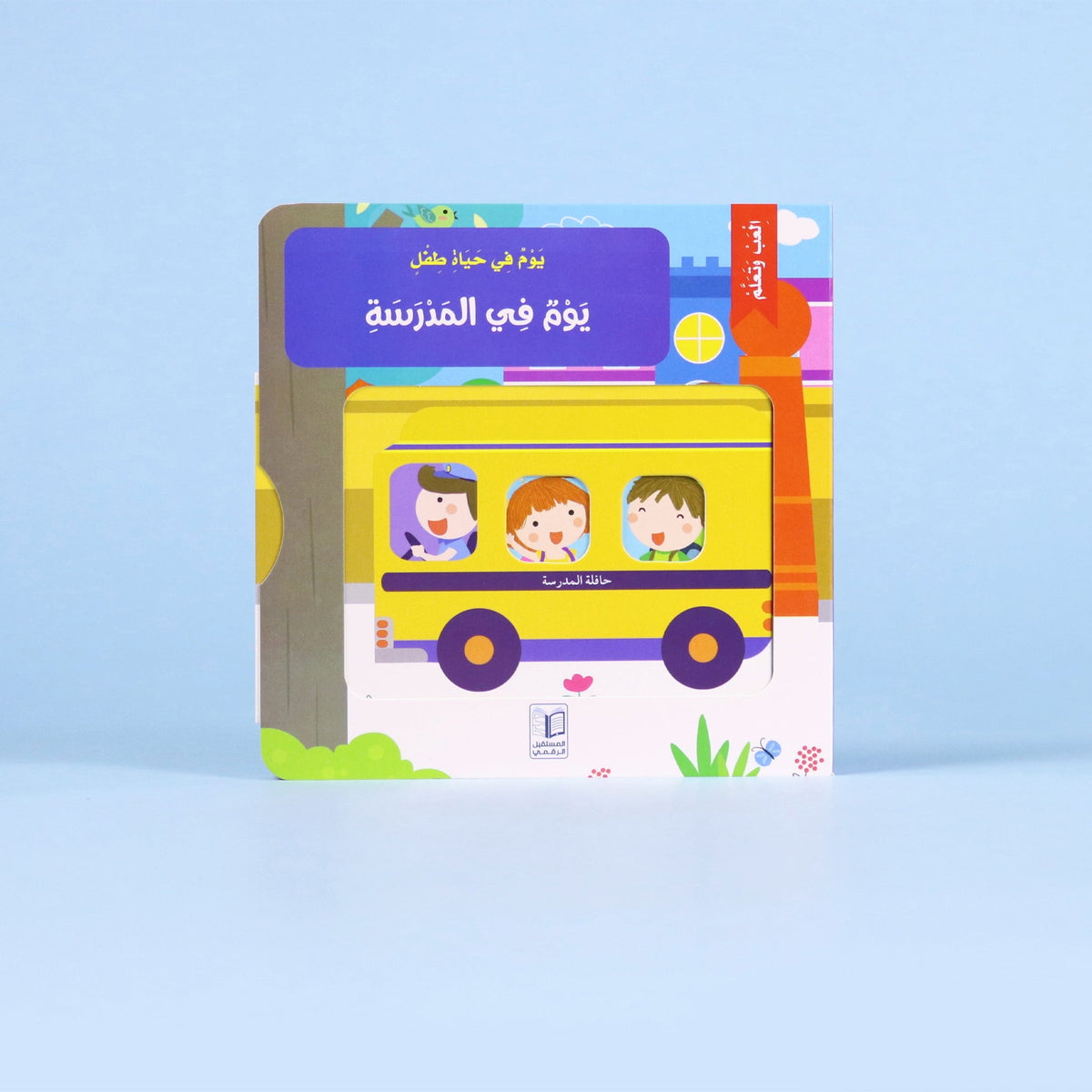
- Read about nursery. The CDC suggests reading stories or pretend play about new places to help children feel comfortable (CDC). A Day in a Child’s Life: At School (ages 1–4) shows the classroom, the teacher and new friends.
- Play nursery at home. Act out story time, a song and snack time, and swap roles so your child is the teacher (UNICEF). A board like the Wooden Learning Easel makes it feel real.
- Practise short goodbyes. Leave your child with a grandparent or another familiar person, first for a short time and then for longer (AAP; NHS).
- Move bedtime earlier. Shift bed and wake-up times a week or two before the start (AAP). Children aged three to five need 10 to 13 hours of sleep a day, including naps (CDC).
- Talk about it simply and positively: what they will do there, and who will pick them up.
The first day: how to say goodbye
- Keep it short, and the same every day. A hug, a kiss and a wave from the door, then leave, even if there are tears. A long goodbye stretches the distress (AAP; Zero to Three).
- Never sneak out. Slipping away teaches a child that you could disappear at any moment, and makes the next morning harder (Zero to Three).
- Say when you'll be back, in their terms: "after lunch" or "after your nap", not "at two o'clock" (AAP).
- Once you've gone, don't come back in to check on them; it starts the goodbye all over again (AAP).
- Send something from home: a small toy, a family photo, or something that smells of you (NHS; UNICEF).
- Stay calm and smile. Children pick up on your tension (NHS).
- Be on time at pick-up, the same time every day if you can (NAEYC).
After nursery: talking about the day
Ask first about the best part of the day, and only then about anything hard. Accept tears and anger as normal, and never make fun of fear (NAEYC). By four, most children can talk about at least one thing that happened during their day (CDC); younger children may say very little, and that's fine.
Skills that help at nursery and KG1
These are things most children can do by each age, from the CDC. Practise them in everyday play, not as tests.
| Age | Most children by this age (CDC) | Practise at home |
|---|---|---|
| 3 | Joins other children to play; says their first name when asked; puts on some clothes, like loose trousers or a jacket; uses a fork; draws a circle when shown how | Let them dress themselves; playdough to strengthen fingers; two- or three-step instructions, like "get your shoes and your coat" |
| 4 | Pretends to be something else, like a teacher; likes to be a helper; holds a crayon between fingers and thumb, not in a fist; unbuttons some buttons; names a few colours | Pretend play, including "school"; drawing and colouring; small jobs at home |
| 5 | Takes turns and follows rules in games; pays attention for 5 to 10 minutes during a story or a craft; writes some letters of their name; counts to 10; buttons some buttons | Turn-taking games; reading together every day; writing their name |
Sources: CDC milestones at 3, 4 and 5 years. Toilet training: most children can be toilet trained between 18 months and two and a half, and starting nursery can set it back for a while, so agree one approach with the nursery (NHS).
Books and toys that help
- A Day in a Child’s Life: At School (ages 1–4): the classroom, the teacher and new friends, to read together before the first day.
- I Am Muslim: School & Dental Care (ages 2–5): waking up early, brushing teeth and getting ready for school with Ahmed and Sara.
- Learning Clock with Daily Routine Cards (ages 3–8): the day's routine on cards, so "after lunch" means something.
- Wooden Learning Easel (ages 3–6): a whiteboard and a chalkboard for playing teacher.
- Learn Arabic Letters (ages 3–5): a write-and-wipe book for the letters of their name, at their own pace.
More for this age in toys for ages 3 to 5 and children's books.
When to talk to the doctor
Talk to your child's doctor if the distress is still strong after a few weeks, if your child stays upset long after you have gone, or if fears and worries start to get in the way of nursery, home or play (NHS; CDC). For any worry about development, the CDC's advice is the same: don't wait, talk to the doctor and ask about developmental screening.
Questions parents ask
My child cries every morning at nursery. What should I do?
Keep the goodbye short and the same every day, leave calmly, and come back when you said you would. Most children settle as the routine becomes familiar. If it hasn't eased after a few weeks, talk to the doctor.
Should I leave without my child seeing?
No. Always say goodbye. Slipping away teaches children that you could disappear at any time and makes the next drop-off harder (Zero to Three).
At what age can a child start KG1 in Egypt?
Government schools accept kindergarten applicants from age four (Ministry of Education). Private and international schools set their own rules, and some count the child's age on 1 October, so check the school's notice.
My child was fine for a week and now refuses to go. Why?
It's common. Separation anxiety can come back for a while at stressful times, such as after an illness or a change at home (NHS). Keep the routine the same, talk about what they enjoy there, and speak to the teacher.
How much sleep does a child need before starting nursery?
Children aged three to five need 10 to 13 hours of sleep a day, including naps (CDC). Move bedtime earlier a week or two before nursery starts.
Read next: Short stories about cleanliness; what to do during toddler tantrums.
About Kiddil: an online shop for toys and children's books in Egypt, for ages 0 to 12. Delivery to every governorate (EGP 50, free from EGP 1,500), cash on delivery and 14-day returns. All toys · Children's books