




Three Short Stories About Honesty and Lying for Kids
Published · Kiddil
These three original Kiddil stories each take a different honesty choice: admitting a mistake, correcting something untrue, and returning a lost item. Read one at a time and ask a question rather than asking your child to recite a lesson. Young children can mix imagination and reality; fear of an angry reaction can also make a child hide what happened. The American Academy of Pediatrics and ZERO TO THREE recommend calm, age-aware responses and modelling truthfulness ourselves (AAP guidance on children and lying; ZERO TO THREE).
Story 1: The Paint on the Table
Nour was painting a bright yellow sun. She reached for the blue brush, and her cup tipped over. Blue water ran across the table and onto her brother's drawing. He looked at the wet paper and asked, “What happened?”
Nour wanted to say the cat had jumped up. The cat was asleep by the window. She took a breath. “I knocked over the cup. I'm sorry. Can I help make you another picture?”
Her brother was still disappointed. They dried the table together, then drew a new sky with the blue paint that was left. Nour learned that telling the truth did not make the spill disappear, but it let her help put things right.
Ask: What was Nour afraid would happen? What could you say if you spilled something?
Story 2: The Tower I Didn't Build
At school, Sami saw a tall block tower next to the door. “I made that!” he told his friends. He liked their surprised faces. Then Mariam came back from washing her hands. “I built it before break,” she said.
Sami's face grew warm. For a moment he wanted to argue. Instead he said, “You're right. I said it was mine because I wanted everyone to notice me. I'm sorry.”
“You can help me make the next one,” Mariam said. Sami brought the big blocks, Mariam placed the small ones, and together they built a bridge. This time, Sami told his friends exactly who made it.
Ask: Why did Sami say the tower was his? How did he correct the story?
Story 3: The Red Pencil Case
Hana found a red pencil case under the library chair. Inside were coloured pencils and a little card that said “Yara”. Hana loved the silver star on the zip. She slipped the case into her bag and walked to the door.
Then she saw Yara searching under the tables. Hana turned back. “I found it. I was going to keep it, but it has your name. Here.” Yara held the case close and said, “I've been looking everywhere. Thank you for telling me.”
Hana still liked the silver star. She also liked knowing that Yara had her pencils back.
Ask: What made Hana change her mind? If you find something, how can you look for its owner?
How to use an honesty story at home
Choose a question the child can answer in their own words, and listen before explaining your view. If something has actually gone wrong, describe what you see and invite repair: “The paint spilled. Let's clean it up.” This avoids trapping a young child with “Did you do it?” when you already know. Praise a truthful account and show how to fix the mistake. ZERO TO THREE recommends this calm teaching approach for preschoolers (ZERO TO THREE).
Do not treat every pretend story as deliberate deception. For children under about six, the line between fantasy and reality can still be unclear. Adults also teach by example: the AAP advises telling the truth ourselves and avoiding harsh overreaction when a child lies (AAP). If repeated lying or other behavior seriously worries you, ask a pediatrician or qualified child-health professional for individual advice.
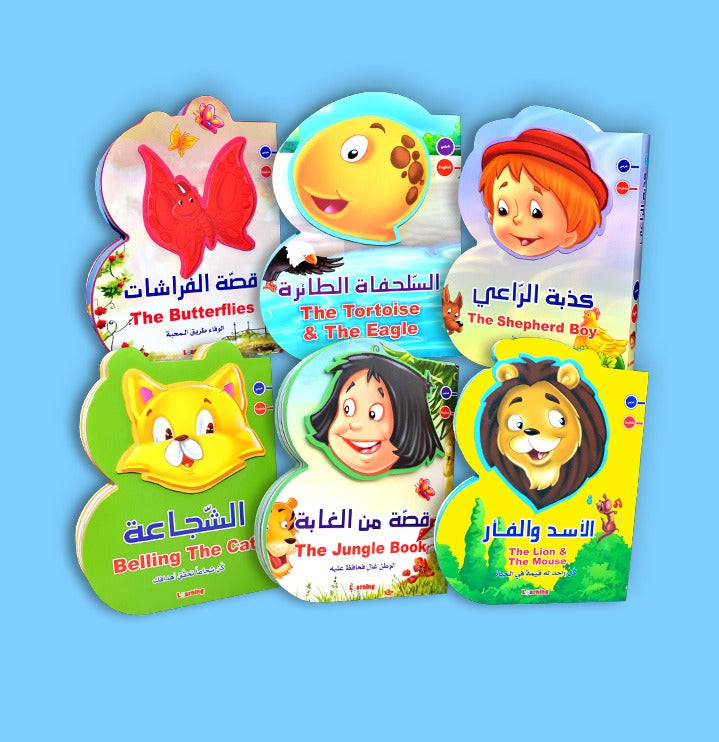
For more original stories covering other values, read ten short moral stories. Kiddil's Bilingual Moral & Fantasy Stories is a separate illustrated book collection labelled for ages two to five; it can support shared reading, but these three stories are written for this page and are not inside that product.
Questions parents ask
At what age do children understand lying?
Young children may say things that are untrue while still mixing fantasy and reality. The AAP says the distinction becomes clearer after about age six. Respond to the child's age and situation, rather than applying an adult label to every story (AAP).
Should I call my child a liar?
Describe the untrue statement and what needs to be corrected, without making “liar” the child's identity. Stay calm, make truth safe to tell and help repair the result (AAP; ZERO TO THREE).
How do I respond when my child admits a mistake?
Thank them for telling you, keep an appropriate boundary and work out how to put things right. Harsh overreaction can make children afraid to tell the truth next time (AAP; ZERO TO THREE).
Is an imaginary story the same as a lie?
Not always. Younger children often use make-believe and may not clearly separate it from reality. Ask gentle questions and explain which parts are pretend and which things really happened (AAP; ZERO TO THREE).
When should I ask for help about repeated lying?
If lying is persistent or part of a broader pattern that worries you, speak with your child's pediatrician or a qualified mental-health professional. They can look at the child's age and circumstances (AAP).
About Kiddil: an online shop for toys and children's books in Egypt, for ages 0 to 12. Delivery to every governorate (EGP 50, free from EGP 1,500), cash on delivery and 14-day returns. All toys · Children's books