




10 Short Moral Stories for Kids: Honesty, Kindness, Sharing and More
Published · Updated · Kiddil
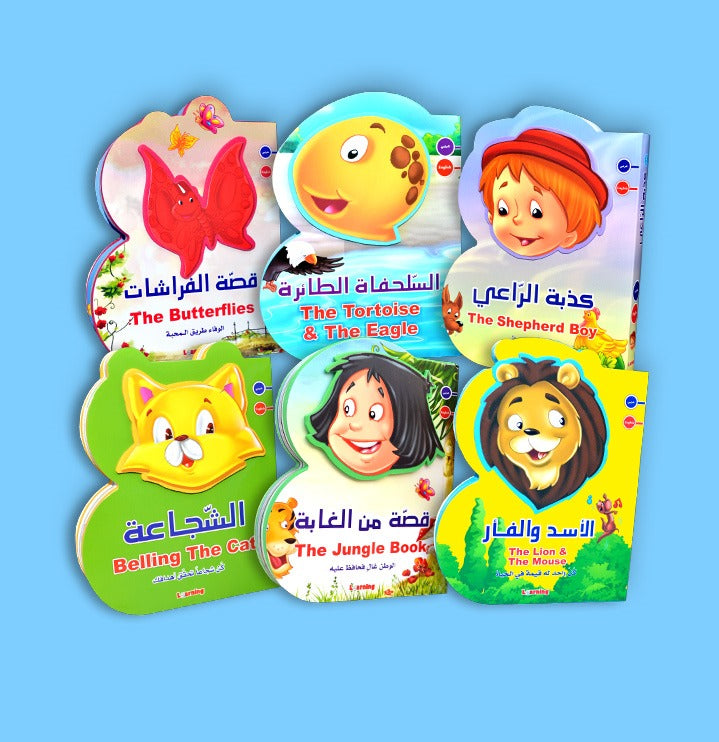
In short: ten short stories written for this page, each read in about two minutes and each carrying one clear value, with the lesson and one question to ask your child afterwards. Suitable from about four, at bedtime or in class. The Arabic version of this page has the same stories in simple Modern Standard Arabic.
1. A story about honesty: The Broken Vase
Omar was playing ball in the living room, even though his mother had told him not to play ball indoors. Suddenly the ball hit the blue vase, which fell and broke. Omar was scared, and thought about saying the cat had knocked it over. But he remembered how it feels when someone lies to him. He went to his mother and said quietly, “I broke the vase, Mum. I’m sorry.” She hugged him and said, “We can buy another vase. Your honesty can’t be bought.” Then they picked up the pieces together, carefully.
The lesson: telling the truth takes courage, but it makes people trust us. Ask: why didn’t Omar blame the cat?
2. A story about trustworthiness: The Lost Wallet
At the club, Salma found a brown wallet under a bench. Inside were money and a card with a photo of an older man. Her friend said, “Keep it — nobody will know.” But Salma closed the wallet and said, “Its owner is looking for it right now.” She took it to the security office. Soon the man came hurrying in, and when he saw his wallet he smiled: “It has very important papers in it. Thank you for your honesty.”
The lesson: being trustworthy means looking after what isn’t ours and returning it, even when nobody is watching. Ask: how do you think the man felt before he found his wallet?
3. A story about kindness to parents: A Surprise for Mum
Youssef came home from school and found his mother tired after a long day. He thought for a moment, then quietly laid the plates on the table, filled the glasses with water and drew her a little card: “Thank you, Mum, for everything.” When she saw the table and the card, her eyes filled with tears. “This is the best present,” she said. From that day on, Youssef helped set the table every evening.
The lesson: being good to our parents is more than words; it is noticing when they are tired and helping without being asked. Ask: what small thing could you do for your mum or dad today?
4. A story about kindness to animals: The Thirsty Cat
On a very hot summer day, Laila saw a small cat panting under a car outside her building. She fetched a bowl, filled it with cool water and stepped back so the cat wouldn’t be frightened. The cat came closer and drank until it had had enough, then sat in the shade looking at Laila. The next day Laila put the bowl in the same place, and agreed with the neighbours to fill it every morning.
The lesson: animals feel thirst and hunger just as we do, and caring for them is a great kindness. Ask: how can we look after street animals without hurting or scaring them?
5. A story about teamwork: The Class Garden
The teacher decided the class would plant a small garden in the playground. Every child wanted to do everything alone, so they all got tired and nothing got done. “Let’s share the work,” said the teacher. One group dug the soil, another planted the seeds, a third watered them, and the rest painted a beautiful sign. In half an hour the garden was finished, and everyone laughed at how easy and fun it had become.
The lesson: when we work together and each does a part, we achieve what nobody could do alone. Ask: what job at home could we do together?
6. A story about saying sorry: The Magic Words
In the school queue, Adam pushed his classmate Khaled to get to the front, and Khaled fell and grazed his knee. Adam pretended he hadn’t seen, but he couldn’t concentrate all lesson. At break he went up to Khaled and said, “I’m sorry. It was my fault.” Khaled smiled: “It’s okay — come and play.” Adam felt as if a heavy stone had been lifted off his heart.
The lesson: saying sorry doesn’t make us weaker; it mends what we broke and brings friendship back. Ask: how did Adam feel before and after he apologised?
7. A story about patience: Mariam’s Seed
Mariam planted a seed in a little cup, and the next morning she ran to look at it — nothing. “The seed doesn’t work!” she cried. Her grandfather said, “Seeds work under the soil, where we can’t see them. Water it and wait.” Mariam watered it every day, and after a week two tiny green leaves appeared. She clapped: “It was working all along!”
The lesson: some good things take time, and patience plus effort gets us there. Ask: what do you need to be patient with until you get good at it?
8. A story about gratitude: The Small Present
On his birthday, Karim opened his aunt’s present and found a small coloured pencil. “A small present,” he thought. But then he remembered that his aunt had travelled a long way to be at his party. He went to her and said, “Thank you, auntie — I’ll draw my first picture with it for you.” At the end of the day he gave her a drawing of her house and garden, and she loved it more than anything.
The lesson: a present’s value is in the love behind it, and saying thank you brings hearts closer. Ask: who would you like to thank today?
9. A story about sharing: Half a Sandwich
At break time, Ziad noticed that the new boy was sitting alone with nothing to eat — he had left his lunch bag at home. Ziad looked at his sandwich, broke it in half and handed one half over: “Come on, let’s eat together.” They ate, talked and laughed, and from that day on they were inseparable.
The lesson: sharing doesn’t take away from what we have; it adds friends. Ask: when did you share something with a friend, and how did it feel?
10. A story about tidiness: The Room That Hid Things
Every morning Hana was looking for something: a sock, a pencil, her favourite toy. One day she missed the school bus because she couldn’t find her shoe. That evening she decided to tidy her room: books on the shelf, toys in the box, shoes by the door. And under the bed she found the toy she had lost a month before! She laughed: “The room wasn’t hiding my things — I was throwing them everywhere.”
The lesson: everything has a place, and putting things back saves time and trouble. Ask: where do your toys live, and do you put them back after playing?
How to get the most from moral stories
- One story, one value at a time.
- Ask, don’t preach: one question after the story beats a lecture.
- Link it to real life: “Remember Omar’s story?” when your child meets a similar moment.
- Let them write the ending: what if Omar had lied? What if Salma had kept the wallet?
Books of stories with values
If your child enjoys these stories, picture books let them come back on their own: The Shepherd Boy’s Lie on honesty, the bilingual Moral & Fantasy Stories, the Islamic Manners & Values series and Diary of a Muslim Child — 25 stories. All of them are in books about feelings and values and Islamic stories. For bedtime, read our 8 short bedtime stories, and for the prophets, stories of the prophets for kids.
Frequently asked questions
At what age do moral stories work?
From about four a child understands a simple lesson; from six they can discuss it and invent a different ending.
How many stories a night?
One is enough. Repeating the same story over several nights fixes the lesson better than reading many.
Read next: Short animal stories for kids; Short stories about cleanliness; Short English stories with Arabic translation; three original stories about honesty.
About Kiddil: an online shop for toys and children's books in Egypt, for ages 0 to 12. Delivery to every governorate (EGP 50, free from EGP 1,500), cash on delivery and 14-day returns. All toys · Children's books