




Stories of the Prophets for Kids: 9 Short Stories in Order, From Adam to Muhammad ﷺ
Published · Updated · Kiddil
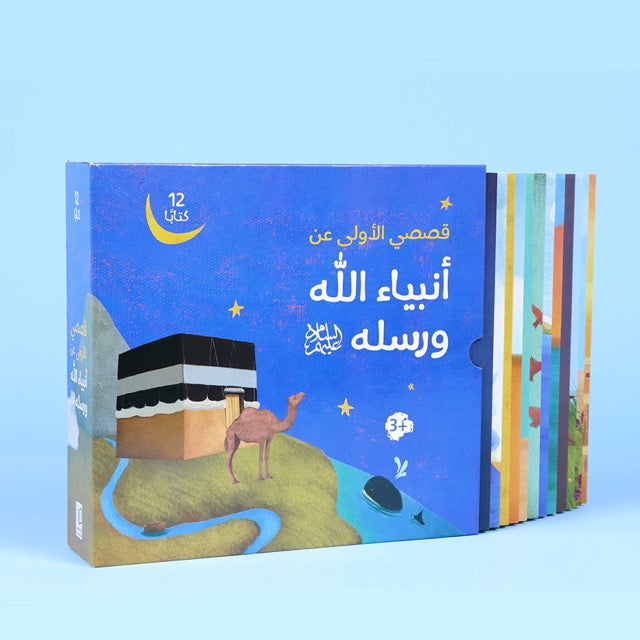
The stories of the prophets are some of the most beautiful stories we can tell our children: honesty, patience, courage and mercy, all from the Qur'an. Here are nine short stories in order, from Adam (peace be upon him) to the Prophet Muhammad ﷺ, written simply for children from about four, each with the verse it comes from and a lesson to talk about together.
How many prophets are named in the Qur'an?
The Qur'an names twenty-five prophets and messengers: Adam, Idris, Nuh (Noah), Hud, Salih, Ibrahim (Abraham), Lut (Lot), Isma'il (Ishmael), Ishaq (Isaac), Ya'qub (Jacob), Yusuf (Joseph), Ayyub (Job), Shu'ayb, Musa (Moses), Harun (Aaron), Dhul-Kifl, Dawud (David), Sulayman (Solomon), Ilyas (Elijah), Al-Yasa' (Elisha), Yunus (Jonah), Zakariyya (Zechariah), Yahya (John), 'Isa (Jesus) and Muhammad ﷺ, peace be upon them all. Every one of them called people to worship God alone.
1. Adam (peace be upon him)
God created Adam from clay and taught him the names of all things, and the angels bowed to him — except Iblis, who refused out of pride. Adam and his wife Hawwa (Eve) lived in Paradise, and God told them they could eat from everything except one tree. Satan whispered to them and they ate from it. They were sorry, turned back to God and asked for forgiveness (Al-A'raf 7:23), and God forgave them.
The lesson: everyone makes mistakes; the wise thing is to say sorry and turn back to God.
2. Nuh — Noah (peace be upon him)
Noah called his people to worship God for a very long time, and only a few believed. God told him to build a great ship, and whenever his people passed by, they mocked him (Hud 11:38). Noah kept building. When the flood came, he boarded the ship with the believers and a pair of every kind of animal, and God saved them.
The lesson: we keep doing what is right even when people laugh at us.
3. Ibrahim — Abraham (peace be upon him)
Abraham's people worshipped idols that could neither hear nor speak. To make them think, he broke all the idols except the biggest one, and when they questioned him he said: ask the big one, if they can speak! Deep down they knew idols were useless, but they were angry and threw him into a great fire — and God said, "O fire, be coolness and safety for Abraham" (Al-Anbiya 21:69). He walked out unharmed. Later, Abraham built the Ka'bah with his son Ishmael.
The lesson: we speak the truth bravely, and God protects those who trust Him.
4. Yusuf — Joseph (peace be upon him)
As a boy, Joseph dreamed that eleven stars, the sun and the moon bowed down to him (Yusuf 12:4). His jealous brothers threw him into a well, and a passing caravan took him to Egypt. Joseph was patient through injustice and prison, until the king of Egypt put him in charge of the country's food stores, and he saved people from years of famine. When his brothers came asking for food, he recognised them — and instead of taking revenge he said, "No blame on you today; may God forgive you" (Yusuf 12:92).
The lesson: patience leads to good, and forgiving is better than revenge.
5. Musa — Moses (peace be upon him)
Moses was born in Egypt in the time of a cruel Pharaoh. His mother was afraid for him, and God inspired her to place him in a chest on the river and not to fear or grieve, for He would return him to her (Al-Qasas 28:7). The water carried the chest to Pharaoh's palace, where Pharaoh's wife loved him and raised him. Baby Moses refused every nurse until he was brought back to his own mother, just as God had promised. Years later, fleeing Pharaoh with his people, Moses reached the sea with Pharaoh's army behind them, and said with certainty, "My Lord is with me; He will guide me" (Ash-Shu'ara 26:62). He struck the sea with his staff, it parted, and God saved them.
The lesson: God never abandons those who trust Him, however hard things look.
6. Sulayman — Solomon (peace be upon him) and the ant
God gave Solomon a great kingdom and taught him the language of birds. One day, as he marched with his army, he heard an ant tell the others to go into their homes so that Solomon and his soldiers would not crush them without noticing (An-Naml 27:18). Solomon smiled, laughing at her words, and thanked God for His blessings upon him.
The lesson: a great king listened to a tiny ant and thanked God — so we are gentle with every creature, however small, and grateful for what we have.
7. Yunus — Jonah (peace be upon him) and the whale
Jonah called his people and they did not listen, so he left them in anger and boarded a ship. At sea, a great fish swallowed him (As-Saffat 37:142), and he was in darkness — the darkness of the fish, the sea and the night. There he prayed, "There is no god but You, glory be to You; I have been one of the wrongdoers" (Al-Anbiya 21:87). God answered him: the whale cast him onto the shore, and God made a gourd plant grow over him for shade until he was well again.
The lesson: we can pray to God at any time, and He hears us, wherever we are.
8. 'Isa — Jesus (peace be upon him)
Jesus was born to Maryam (Mary) without a father, by the power of God. When she brought him to her people they were astonished, so she pointed to the baby — and Jesus spoke from the cradle: "I am the servant of God; He has given me the Scripture and made me a prophet" (Maryam 19:30), and said that God had made him kind and dutiful to his mother (Maryam 19:32).
The lesson: God can do all things, and kindness to our mothers is the way of the prophets.
9. The Prophet Muhammad ﷺ
Before he became a prophet, the people of Mecca called him as-Sadiq al-Amin — the truthful, the trustworthy. When the Quraysh rebuilt the Ka'bah, the tribes argued over who would have the honour of setting the Black Stone in its place. They almost came to blows, then agreed that the first man to enter the sanctuary would decide — and it was Muhammad ﷺ. He spread his cloak, placed the stone in the middle and asked each tribe to hold one edge, so they lifted it together, and then he set it in place with his own hands. Everyone was satisfied. God later sent him as a mercy to all people (Al-Anbiya 21:107).
The lesson: honesty, trustworthiness and wisdom bring people together.
How to tell the stories at each age
- Ages 2–3: one or two sentences and one lesson: "Prophet Jonah prayed to God, and God saved him." Picture books help a great deal.
- Ages 4–6: the short story in full, as above, then one question: "What did Joseph do when he saw his brothers?"
- Age 7 and up: read the verse together from the Qur'an and find the surah the story comes from.
One important tip: dwell on the mercy and hope in each story, and leave out frightening details at bedtime.
Books of prophets' stories and Islamic stories for children
If your child loves these stories, a picture book lets them return to them on their own:
- Stories of the Prophets in English — 12 books, illustrated, and the Arabic edition, also 12 books.
- The Ahsan Al-Qasas series: stories about the Prophet ﷺ and his companions, with audio for your child to listen to.
- Young Children Ask & Learn About Their Faith — 5 stories that answer a child's first questions about faith in reassuring language.
- For everyday manners: the Islamic Manners & Values series (I Am Muslim) — 5 books and Diary of a Muslim Child — 25 stories.
All of them are in stories of the prophets and Islamic stories. For everyday bedtime stories, read our 8 short bedtime stories.
Frequently asked questions
At what age can I tell my child the stories of the prophets?
From about two, in very short sentences. From four, a child can follow a whole story and understand its lesson.
In what order should I tell them?
Chronological order, from Adam to Muhammad ﷺ, helps a child understand that all the prophets called people to worship God alone, one after another.
Arabic or English?
Either works. Reading in Arabic connects your child to the language of the Qur'an; English helps if it's the language they read at school. Whatever the language, recite the verses as they are.
Read next: Short animal stories for kids; simple Ramadan activities for kids.
About Kiddil: an online shop for toys and children's books in Egypt, for ages 0 to 12. Delivery to every governorate (EGP 50, free from EGP 1,500), cash on delivery and 14-day returns. All toys · Children's books