


How Many Puzzle Pieces Should You Choose for a Child?
Published · Kiddil
How we research toy and book guides
Puzzle piece count is a useful comparison, but it is not an age chart. A busy picture with many similar colours can make a small jigsaw harder than a larger one with clear sections. Start with the package age, then look at the actual image, piece size and how much support your child wants. Choose a first attempt you can simplify without pretending that every child follows the same ladder.
Before you begin
Compare two age-appropriate puzzles in good light. Look for an image of the assembled picture as well as a close view of the pieces. Decide whether you have a surface where an unfinished puzzle can stay.
Look at what makes this picture difficult
Check whether the picture has clear objects or large areas of similar sky, water or pattern. Strong landmarks give a child places to begin. Piece size and connector shape matter too. Two boxes marked with the same count may feel very different, so do not treat count as an objective score of the child’s ability.
Make the first attempt smaller
For a new puzzler, assemble part of the picture yourself and offer a small group of missing pieces. Or sort one distinctive object and build that section together. Keep the box picture visible. Watch whether the child matches by image, edge or repeated trial; those observations help you choose the next puzzle more than a guessed age-to-count rule.
Increase one feature, then reassess
When the child wants more, try more pieces with a clear picture, or a similar count with a trickier image. Avoid changing count, size and picture complexity all at once. Repeating a familiar puzzle is also a valid choice, especially if they enjoy telling the picture’s story or completing it with less support.
When the first attempt does not work
If every piece is tried everywhere, narrow the task to one recognisable section. If pieces seem not to connect, check orientation and whether two sets have been mixed. Do not force cardboard joins or assume frustration means the child is too young for all puzzles. This particular image or setup may be a poor match.
Try the idea with things at home
An adult can draw a simple picture on firm paper and cut it into a few large sections. Keep an uncut copy as the model. Change only the number of sections to explore how the same picture feels at another level.
Examples from Kiddil’s toy range
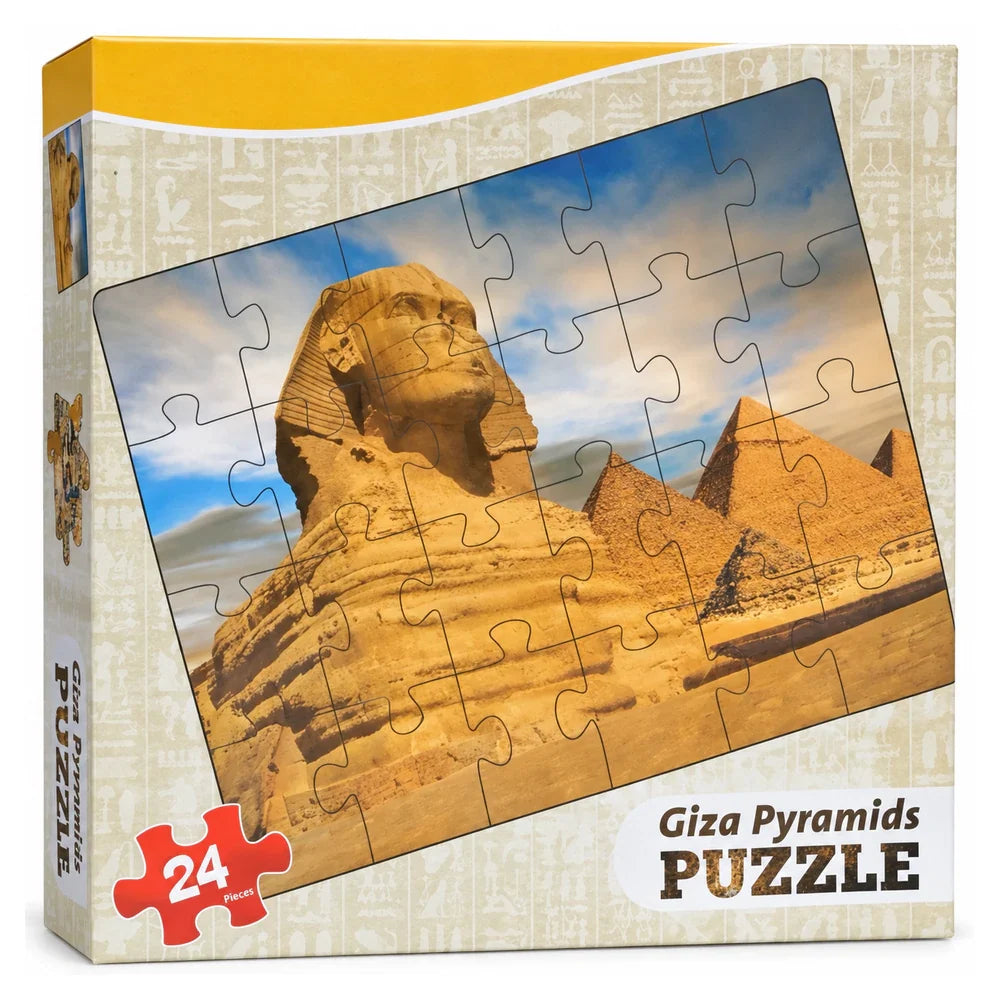
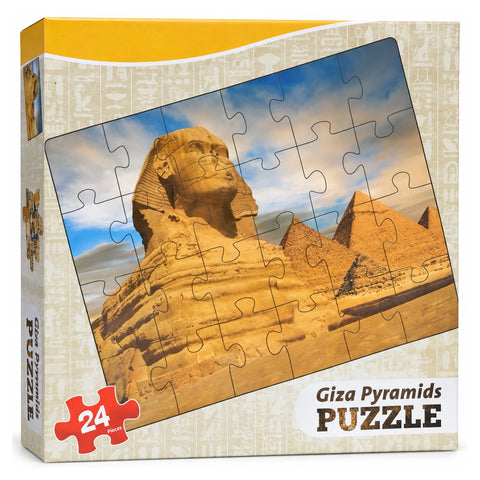
The Giza 24-piece and Underwater World 128-piece puzzles are two real catalogue examples, not consecutive mandatory stages. Compare the pictures and each product’s age information. A circular puzzle also changes how you recognise its boundary.
- Giza Pyramids Puzzle — ages 3–5.
- Underwater World Circular Puzzle — ages 3–5.
Check the package age and safety instructions before use.
Questions about this activity
Is more always better value?
Only if the child can use and enjoy the set. Compare the play experience, component condition and storage needs, not cost per piece alone.
Can I give just part of a puzzle?
Yes, as a supported activity with the rest safely stored. Keep the model clear and return to the complete picture when the child wants to.
Choose your next step
- Jigsaw or Shape Puzzle: Which Play Action Fits?
- Store Kids’ Puzzles and Keep the Pieces Together
- The main guide for this topic
- Browse available toys
- All toy and game parent guides
Related expert background: Source and background. These activities are Kiddil editorial suggestions, not a developmental test or an outcome guarantee.
Toys in this guide
Check each product's age, contents and instructions before choosing. Prices and availability come from the store.

About Kiddil: an online shop for toys and children's books in Egypt, for ages 0 to 12. Delivery to every governorate (EGP 79, free from EGP 1,500), cash on delivery and 14-day returns. All toys · Children's books