


Codebreaker Colour Game: A Parent’s First-Round Guide
Published · Kiddil
How we research toy and book guides
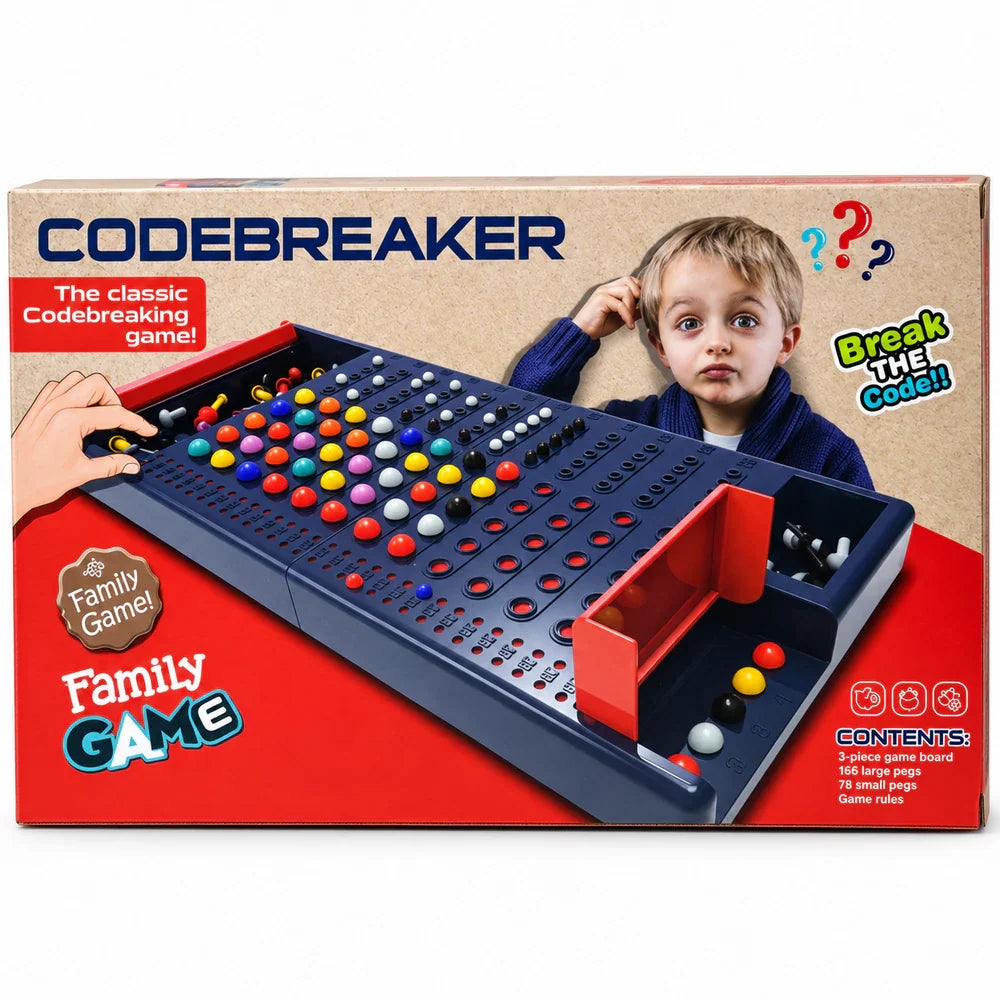
In a colour-code deduction game, one player creates a hidden pattern and the other uses feedback to narrow the possibilities. The important first lesson is reliable feedback, not a clever opening guess. Learn the supplied rules together before hiding the first code. Different editions can use different lengths, colours and repeated-colour rules, so this guide does not replace the rule sheet in your box.
Before you begin
Kiddil’s Codebreaker listing is for two players, ages 6–8. For an eight-year-old starting out, play an open example with an adult first. Count the actual code positions and identify what each feedback marker means from the included rules.
Practise marking a visible code
Put a sample code where both players can see it and make one sample guess. Apply the feedback rule together, checking correct colour and correct position as the edition instructs. Discuss repeated colours only if the rules permit them. Swap roles while the code is still visible so both players practise giving accurate information.
Use each guess as a question
Before changing the whole row, ask what the last feedback ruled out. A child can keep one promising part and change another, or deliberately test a colour. Let them explain the question behind a guess. Avoid telling them a guaranteed strategy unless it has been checked for this edition’s exact rules.
Keep feedback consistent and switch jobs
The setter should not alter the hidden code during a round or give extra facial hints unless you agreed a teaching version. If a marker was wrong, correct it openly and let the guesser reconsider. After the round, switch roles. Giving feedback can reveal a rule misunderstanding that solving alone would not expose.
When the first attempt does not work
If the game becomes random guessing, reopen a sample code and work through one feedback example. If the setter is unsure about a marker, check the rules rather than inventing an answer. You can simplify a paper practice version, but label the change clearly before returning to the boxed game.
Try the idea with things at home
Draw a three-position paper code using three distinct symbols and agree no repeats for this homemade version. Write feedback in words rather than borrowing unknown peg colours. An adult can verify each clue. These are your paper rules, not a claim about the number of positions in Kiddil’s product.
Examples from Kiddil’s toy range
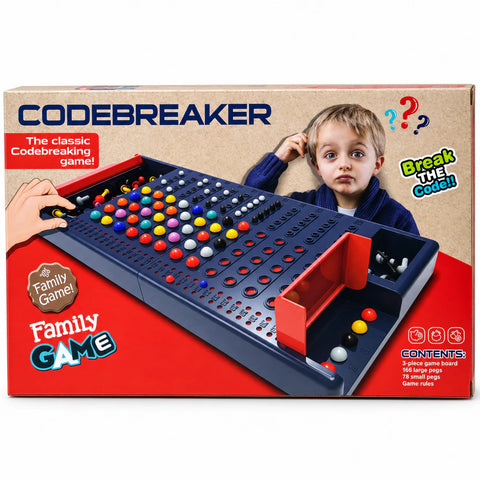
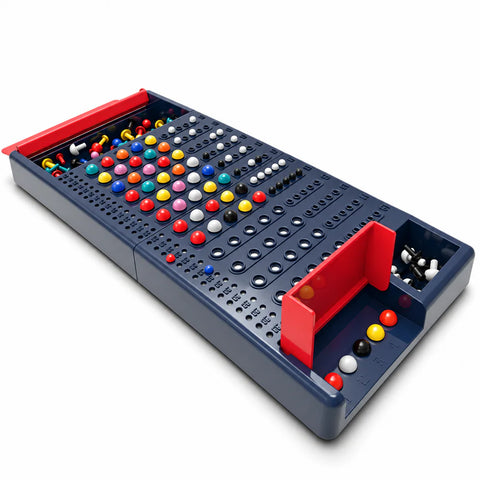
The listed set contains a game board, large and small pegs and rules. Use those rules for marker meanings, permitted codes and the end condition. The product gives a deduction format; it does not guarantee an intelligence or concentration result.
- Codebreaker — ages 6–8.
Check the package age and safety instructions before use.
Questions about this activity
Can colours repeat in the secret code?
Check the rules supplied with your edition. Agree this before setting a code, because it changes what feedback can mean.
What if a clue was wrong?
Correct it openly, pause scoring if needed and let the guesser revisit affected moves. Accurate shared information matters more than protecting a score.
Choose your next step
- Logic Games for Eight-Year-Olds: Plan, Test and Explain
- Sliding Block Puzzles: Help an Eight-Year-Old Start
- The main guide for this topic
- Browse available toys
- All toy and game parent guides
Related expert background: Source and background. These activities are Kiddil editorial suggestions, not a developmental test or an outcome guarantee.
Toys in this guide
Check each product's age, contents and instructions before choosing. Prices and availability come from the store.
About Kiddil: an online shop for toys and children's books in Egypt, for ages 0 to 12. Delivery to every governorate (EGP 79, free from EGP 1,500), cash on delivery and 14-day returns. All toys · Children's books