


Logic Games for Eight-Year-Olds: Plan, Test and Explain
Published · Kiddil
How we research toy and book guides
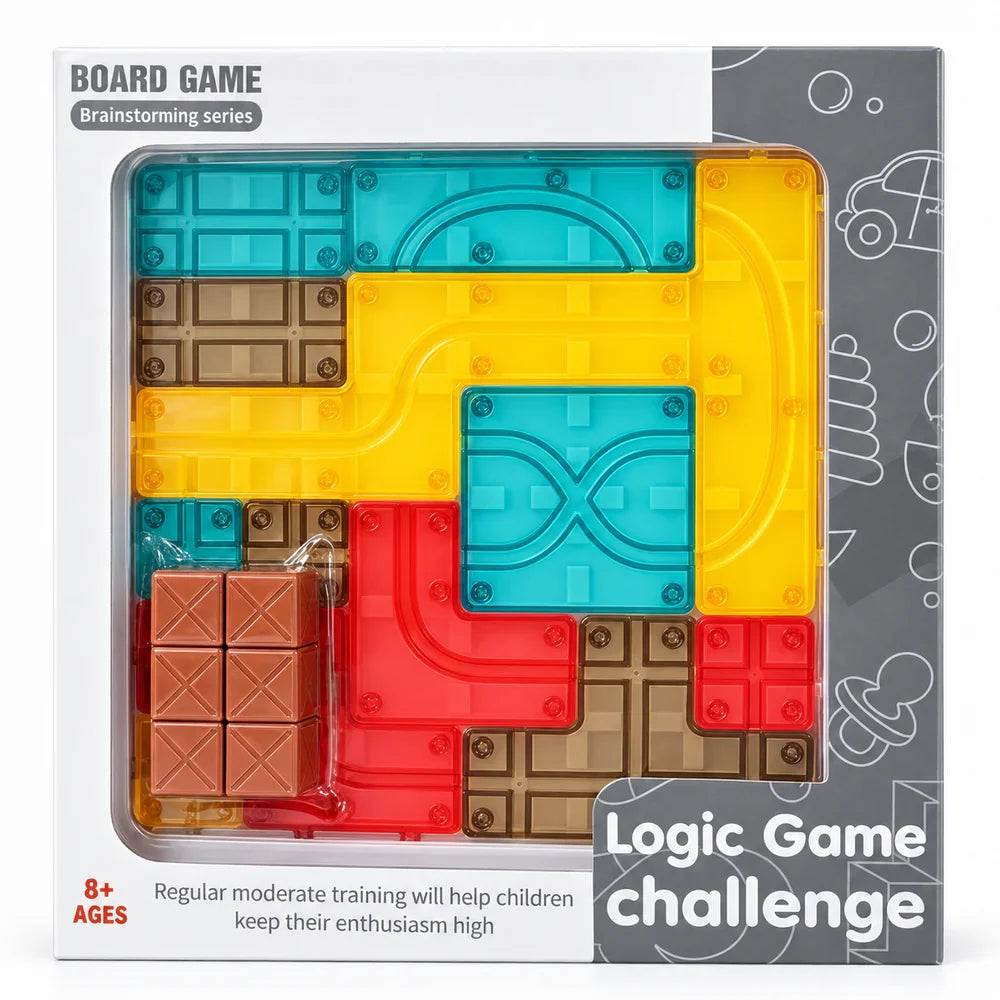
A useful logic game for an eight-year-old gives them a reason to make a plan, test it and change it. Instead of asking for the answer immediately, ask which choice seems most constrained and what they expect to happen next. A route puzzle is a clear example: the path either joins or leaves a gap, so the board provides feedback the child can inspect.
Before you begin
Choose a set labelled for the child’s age and a starting challenge they can understand. Keep paper for a rough plan if helpful. Remove time pressure for the exploration round and keep the rules and target visible.
Find the choices with the fewest options
In a route task, inspect the start, finish and tight spaces before filling the easy middle. Ask which piece can connect to a fixed endpoint and whether another orientation is possible. Let the child show the constraint with a finger or a sketch. You are looking for a reasoned starting point, not demanding a complete mental solution.
Say a prediction, then test it
Before a move, invite one prediction: “If this curve faces left, where does the next piece have to go?” Then assemble and trace the route. If it fails, identify the exact break. A visible mismatch is useful information and can be recorded before changing one part; there is no need to dismantle the whole board every time.
Explain one revision to another player
Ask the child to show what changed between attempts and why. A partner can repeat the explanation back or suggest a different test. Keep the discussion about the board: “This turn blocked the exit.” Avoid turning it into a personality label such as “You never plan.” Finish by choosing which idea they would try next time.
When the first attempt does not work
If there are too many possibilities, keep one section fixed or choose a challenge with more given positions. If the child can solve it but dislikes explaining aloud, accept a drawing or demonstration. An explanation is a tool for play, not a compulsory performance for an adult audience.
Try the idea with things at home
Draw two endpoints and several obstacles on paper. Make two possible routes, then agree what counts as a valid connection. Compare the routes by a clear rule, such as avoiding every obstacle, rather than declaring the adult’s route the correct one.
Examples from Kiddil’s toy range
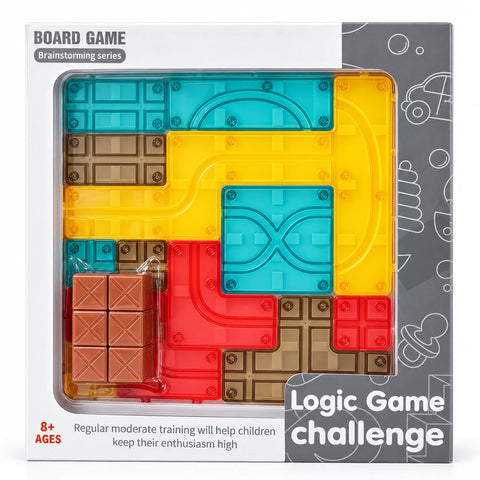
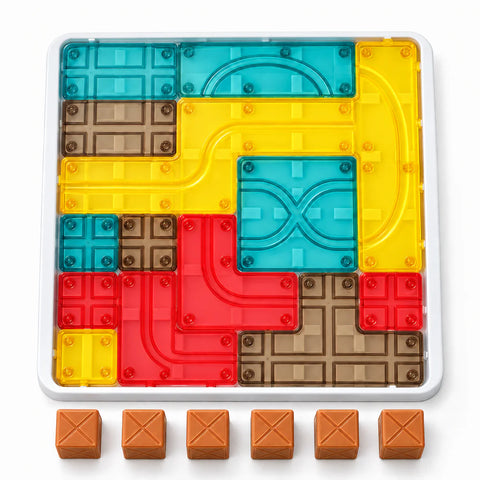
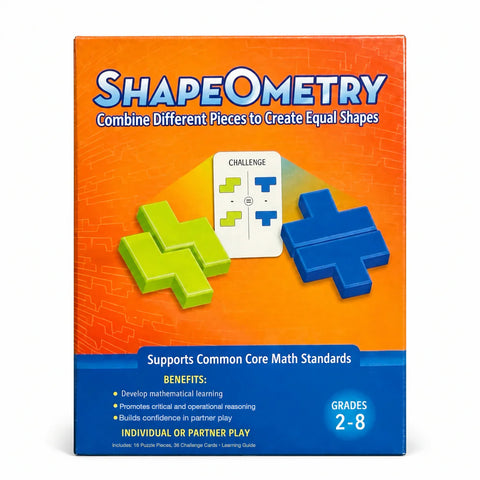
The Path Building set gives a connected-route problem. The Geometric Shape puzzle allows different combinations within an outline according to its catalogue description. Check whether the particular challenge allows more than one answer before judging a different arrangement.
- Path Building Logic Puzzle — ages 8–10.
- Geometric Shape Puzzle — ages 7–13.
Check the package age and safety instructions before use.
Questions about this activity
Should an eight-year-old solve it alone?
Independence depends on familiarity with the task. Offer a clue when requested and distinguish learning a new rule from exploring an established one.
Is a slow solution worse?
Not in an untimed exploration round. Careful checking may be exactly what the activity invites. Use speed only when it belongs to the agreed game.
Choose your next step
- Codebreaker Colour Game: A Parent’s First-Round Guide
- Sliding Block Puzzles: Help an Eight-Year-Old Start
- The main guide for this topic
- Browse available toys
- All toy and game parent guides
Related expert background: Source and background. These activities are Kiddil editorial suggestions, not a developmental test or an outcome guarantee.
Toys in this guide
Check each product's age, contents and instructions before choosing. Prices and availability come from the store.

About Kiddil: an online shop for toys and children's books in Egypt, for ages 0 to 12. Delivery to every governorate (EGP 79, free from EGP 1,500), cash on delivery and 14-day returns. All toys · Children's books