


Cooperative Problem-Solving Games for Kids
Published · Kiddil
How we research toy and book guides
A cooperative thinking game gives everyone one shared problem instead of competing scores. The simplest version is to build a pattern together while only one person moves pieces at a time. It works best when each player has a real decision, rather than one child solving everything and another handing over parts. Here are three ways to make the cooperation visible.
Before you begin
For children using an age-appropriate pattern or construction set. Two players and an adult facilitator are a useful starting arrangement. Choose an easy familiar task first; the new challenge is coordinating, not also learning a difficult puzzle.
Builder and describer
One player sees a small model and describes it; the other builds. Allow questions such as “Is the tree beside the house?” Swap roles after a short layout. Avoid hidden information if it frustrates a new player: both can look at the model while still taking different jobs. The goal is a useful description, not catching someone out.
One move and one reason
Take turns choosing one piece. Before placing it, say or point to what it should achieve: “This closes the gap.” The next player can build on the idea or propose an alternative. If two plans conflict, test them in separate rounds instead of letting the louder player choose every time.
Check together before finishing
Give the checking job equal status to the building job. Compare the result with the target one area at a time. Ask each child to find one part that works and one part to inspect. When it matches, describe the teamwork specifically: “You noticed the gap, and she found a piece that fitted.”
When the first attempt does not work
If one player takes over, make the next decision belong to the quieter player and limit the number of pieces on the table. If everyone disagrees, return to a model with only two or three decisions. Cooperation is not the absence of disagreement; it is having a fair way to test ideas without grabbing or insulting.
Try the idea with things at home
Draw a three-object map on paper and describe it to a partner, or make a town from large boxes you already have. Paper designs can be redrawn for free. Choose objects and surfaces that are safe for the youngest participant.
Examples from Kiddil’s toy range
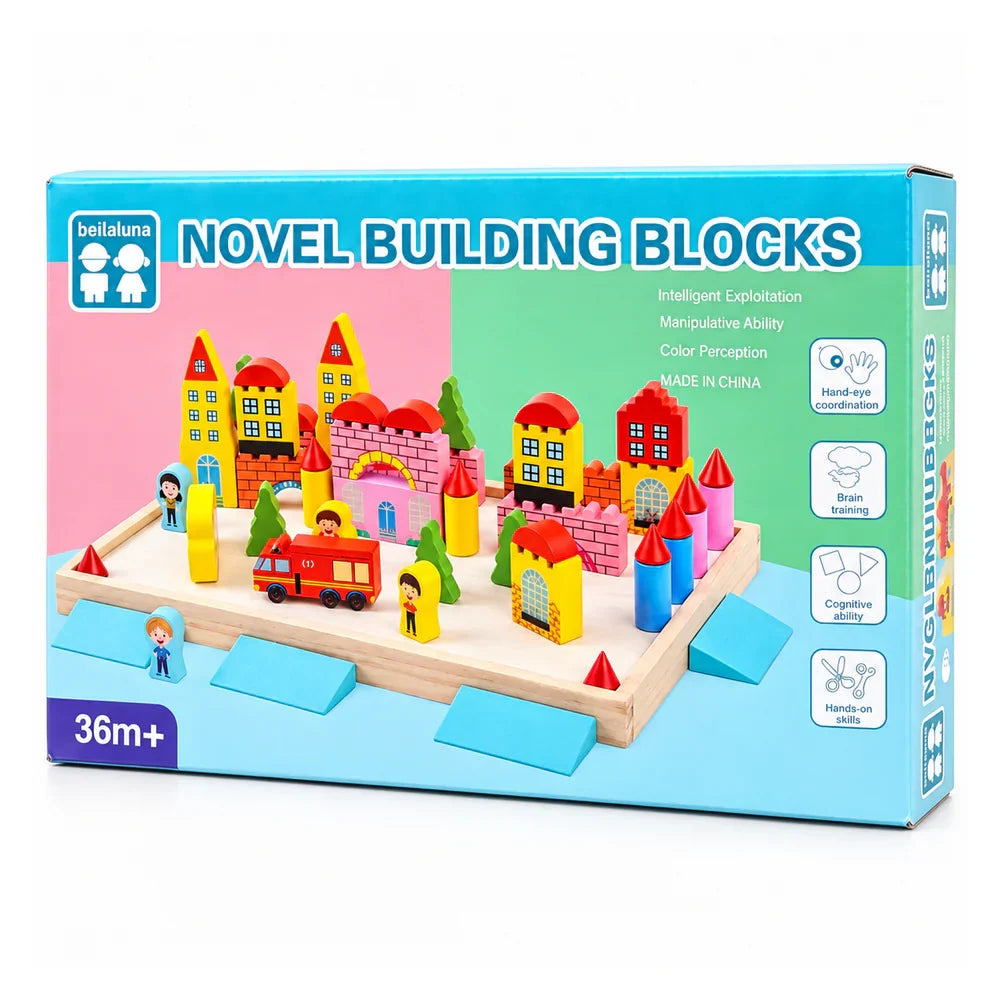
City Blocks can support a shared town plan; Pattern Blocks can support taking turns filling a design card. These are suggested cooperative variations, not claims that either box contains a separate cooperative rulebook.
- Wooden City Blocks — ages 3–6.
- Wooden Pattern Blocks — ages 3–6.
Check the package age and safety instructions before use.
Questions about this activity
Do we need to finish the puzzle?
No. A useful round may end after trying two plans. Agree a stopping point and preserve the setup if the children want to return.
What if a child does not want a partner?
Offer solo play and invite cooperation another time. Sharing a task should not require surrendering every favourite activity.
Choose your next step
- How to Help a Child Stuck on a Puzzle
- Choose a Logic Puzzle at the Right Difficulty
- The main guide for this topic
- Browse available toys
- All toy and game parent guides
Related expert background: Source and background. These activities are Kiddil editorial suggestions, not a developmental test or an outcome guarantee.
Toys in this guide
Check each product's age, contents and instructions before choosing. Prices and availability come from the store.


About Kiddil: an online shop for toys and children's books in Egypt, for ages 0 to 12. Delivery to every governorate (EGP 79, free from EGP 1,500), cash on delivery and 14-day returns. All toys · Children's books