




Wooden City Blocks: A Parent's First-Week Play Guide
Published · Kiddil
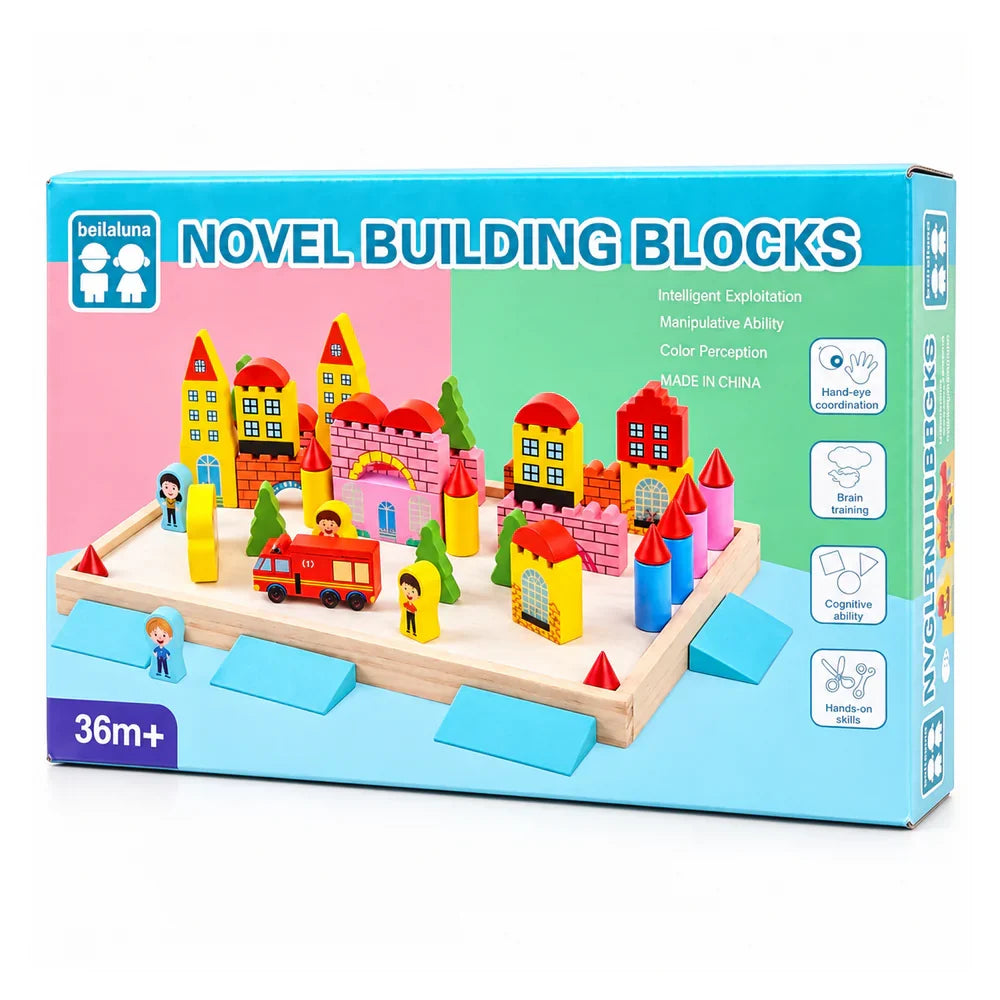
This guide is for families using Kiddil's Wooden City Blocks set. Its product listing describes wooden houses, towers, trees, a car, small figures and a base. The listed age is 3–6 years. You can lay out a town, then rearrange it and tell a different story. The activities below are suggestions, not instructions printed by the manufacturer or evidence of a guaranteed learning outcome.
Check the set and space first
Read the package guidance when it arrives. Put the base on a stable, low surface and clear enough room for the car to move. Inspect pieces for damage before play; keep the smaller pieces out of reach of children under three. CPSC advises choosing toys by package age and keeping small parts away from under-threes (CPSC toy guidance). Store every piece together after play.
A flexible first-week plan
- Day 1 — Explore: Spread the pieces out. Ask what your child recognises. Let them place anything anywhere; you do not need a perfect city.
- Day 2 — Make a road: Put two buildings apart and leave room for the car. Ask what happens if the gap gets smaller.
- Day 3 — Talk about place: Put a tree next to a house and a figure behind it. Invite the child to move them and use words like beside, behind and between. NAEYC highlights adults' spatial language during block play (NAEYC).
- Day 4 — Tell a story: Where is the car going? Who lives in the tall building? Follow your child's answer rather than giving a fixed script.
- Day 5 — Change the plan: Move one building and ask how the road or story changes. Let a collapse or mistake be a reason to rebuild.
- Days 6–7 — Repeat a favourite: Recreate yesterday's layout from memory or invent a new rule. Stop when your child has had enough; short, enjoyable play is fine.
You do not need to follow this on consecutive days. The AAP encourages inexpensive, imaginative play materials, including blocks; the time together matters more than a strict schedule (AAP play ideas).
Make it easier or harder
For a child just starting, use only two buildings, the car and one figure. If that is easy, add a route to three places or a story problem: “The road is closed; how can the car reach the tree?” Ask one question, wait, and let the child experiment. Avoid correcting every decision: an unusual layout can be the start of a good story.
Care and next steps
Check for loose or damaged pieces each time, wipe as directed on the packaging, let pieces dry fully, and keep them in a closed box away from babies. The product listing does not specify a special cleaning method, so follow the package or supplier guidance rather than soaking wood. For more play prompts, see seven block activities. If you are still choosing a gift, read blocks or puzzles for preschoolers.
Questions parents ask
What age is this exact set for?
The Kiddil listing states ages 3–6. Check the delivered package and use the more restrictive guidance if it differs.
Does the city have to match a picture?
No. The point of this suggested play plan is to build and rearrange a town. Start with the child's own design.
What if a younger child is nearby?
Keep the smaller pieces inaccessible to them and supervise the play area. Use toys suited to each child's age (CPSC).
Toys in this guide
Check each toy's age, contents and warnings before choosing. Prices and availability come from the store.


About Kiddil: an online shop for toys and children's books in Egypt, for ages 0 to 12. Delivery to every governorate (EGP 50, free from EGP 1,500), cash on delivery and 14-day returns. All toys · Children's books