



Children's Books by Age: What to Read From Baby to Age 8
Published · Kiddil
The best book for your child is not the most expensive one — it is the one that fits their age right now: pages that survive small hands, pictures they can name and words they can follow. This guide covers what to choose at each stage from the first year to age 8, and how to read together so that they grow to love reading.
Books by age — quick table
| Age | Type of book | Example |
|---|---|---|
| 1 | Board books, sound books, touch-and-feel | My Sound Book: Animal Sounds |
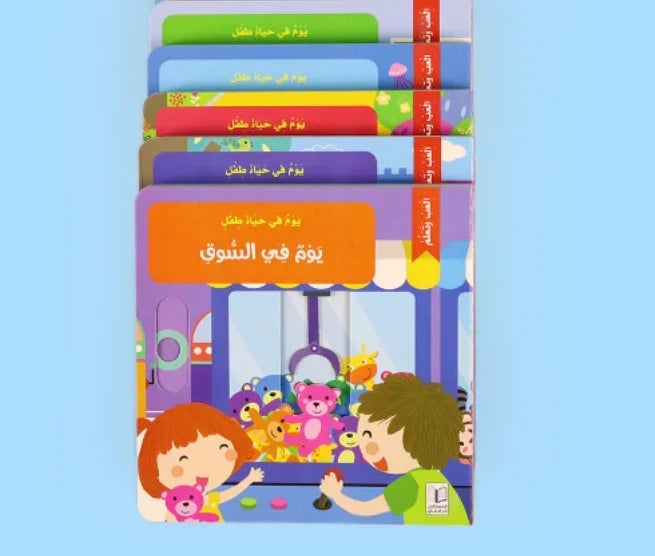
| 2 | Flaps and surprises, very short stories | A Day in a Child’s Life, The Lion and the Mouse |
| 3–4 | Stories with values, pop-up stories, Montessori books | Moral & Fantasy Stories, The Ugly Duckling |
| 4–6 | Write-and-wipe, activity and logic, first words | Learn Letters, My Fun Book |
| 6–8 | Reading alone, picture dictionary, careers | Illustrated Dictionary, I Want to Be a Doctor |
Books for 1-year-olds (6 to 18 months)
At this age a book is a toy: they hold it, turn it over and chew it. Choose:
- Board books: thick pages that don't tear and are easy to turn alone. See our board books.
- Sound books: a button that plays the animal's or the vehicle's sound connects picture, sound and word — like My Sound Book: Animal Sounds.
- Touch-and-feel books: soft and rough textures under their fingers — see touch-and-feel books.
How to read them: you don't have to read the text. Point at the picture and name it: "That's a duck. The duck says quack." Two minutes is enough.
Books for 2-year-olds
Two-year-olds want to take part: lift the flap, press the button, find what's hidden. The right books:
- Interactive books with flaps and surprises: something hidden to discover on every page, which teaches that things exist even when they can't be seen. See our lift-the-flap books and A Day in a Child's Life (5 books), which follows their day: home, the park, the market and school.
- Sound books: like My Sound Book: Animal Sounds, which pairs each animal's picture and name with its sound, so your child hears it and then says it with you.
- Very short stories with one idea: like The Lion and the Mouse, in Arabic and English.
For simple pen activities, My First Games (ages 2–3) has colouring, dot-to-dot and easy mazes. Every book for this age is in baby and toddler books.
Books for ages 3–4
Now your child can follow a story with a beginning and an end, and asks "why?" a lot. Choose:
- Stories with values: honesty, sharing and courage — like the Bilingual Moral & Fantasy Stories and our books about feelings and values.
- 3D pop-up stories: every page opens into a scene, like The Ugly Duckling. See all pop-up books.
- Montessori touch books: letters, numbers and shapes to touch and trace with a finger before holding a pencil — My First Montessori Touch Books (3 books).
- Religious stories: illustrated stories of the prophets and Islamic stories in simple language.
Books for ages 4–6 (pre-school and KG)
This is the school-readiness stage: letters, numbers and logic. Books that help:
- Write-and-wipe books: write the letter, wipe it and try again without running out of paper — like Learn Arabic Letters.
- Activity and logic books: sequencing, sorting and mazes — like My Fun Book: Logic & Sequencing. All our activity books are here.
- First-words books: illustrated vocabulary by topic, like 1000 First STEM Words (1,000 words across 29 topics), and all our first-words books.
Books for ages 6–8
Your child now reads short sentences alone and needs books that keep them going: short stories in easy language, an illustrated dictionary they can search themselves such as My First Illustrated Arabic–English Dictionary, and books about careers such as the "I Want to Be" series: I Want to Be a Doctor.
Arabic or English?
Both. Children can learn two languages from an early age when each language has its time. The easiest route is bilingual books with the sentence in Arabic and English on the same page: read in the language you speak at home and let the other follow gradually.
5 tips to raise a child who loves reading
- A fixed time: before bed every day, even for five minutes. If you need stories, here are 8 short bedtime stories.
- Let them choose, even if it's the same book for the twentieth time.
- Books within reach: a low shelf or a basket by the bed.
- Read in front of them: children copy what they see.
- Don't turn it into a test: ask "what did you like?" rather than "what colour is the duck?"
Frequently asked questions
At what age should I start reading to my child?
From the first months. A baby doesn't follow the story, but loves your voice and gets used to books — the foundation for talking later.
What is the best book for a 1-year-old?
A board book with large, clear pictures, or a sound book. Thick pages survive pulling and chewing.
My child tears books. What should I do?
Start with board books and touch-and-feel books, and keep paper books for reading together.
Read next: Raising a reader in two languages: bilingual Arabic–English books; Teaching letters and numbers through play, in Arabic and English; How to help your child talk: play ideas, speech toys and milestones; Teaching your child to read and write Arabic; Short animal stories for kids; Short English stories with Arabic translation.
About Kiddil: an online shop for toys and children's books in Egypt, for ages 0 to 12. Delivery to every governorate (EGP 50, free from EGP 1,500), cash on delivery and 14-day returns. All toys · Children's books